Showing posts with label politics. Show all posts

Wednesday, February 7, 2018

Review: Museum of the Bible Offers Minority Report

From The Living Church, 21 Jan. 2018
The Bible is big, according to the new Museum of the Bible. It’s also influential, easy to understand, relevant to everyday life, and very American. The museum also suggests that the Bible is not all that complex or challenging.

The museum announces its presence with a text-emblazoned portal, three stories of the first chapter of Genesis, presented as a massively resized version of the plates used by the Gutenberg Bible’s printer. The entrance hall features enormous overhead screens, on which an ever-changing rotation of evocative photographs signals the technological thrust of the museum’s displays. The building’s glass-walled, futuristic cap offers stunning views of the U.S. Capitol, just two blocks away.

Though founder Steve Green deflected attention during a press conference to the institution’s 50,000 founding donors, the Museum of the Bible is his brainchild. Green, president of Hobby Lobby, began collecting biblical artifacts in 2009, aiming to present them to the public in a format that would garner wide attention. A committed evangelical who has taken his turn in the culture wars, Green knows how to make a political statement. His museum aims to educate and to inspire, but those brassy yards of bas-relief text are also a way of claiming a permanent corner of the public square for his people, the people of the Bible.

Tuesday, December 19, 2017

Perishing Words

“And he confessed, and denied not; but confessed, I am not the Christ…He said, I am the voice of one crying in the wilderness, Make straight the way of the Lord.”  St. John 1:20,23

We are living in an age of powerful words.  Over the last few months, women from every corner of public life have found the courage to come forward to say: “I was violated, demeaned, treated with cruelty.  Sexual abuse affected me too, and I will be silent no longer.”  And it seems that every morning there is another apology, another resignation of some powerful man. 

In the last few years, people all across the nation have spoken out about racial discrimination and brutal treatment of African Americans.  There have been bestselling books, protests and counter protests, verdicts rendered.  Old statues have fallen, flags have been hauled down, and a few football players sit on the sidelines.

Words are, of course, the oxygen of politics. 

Monday, October 23, 2017

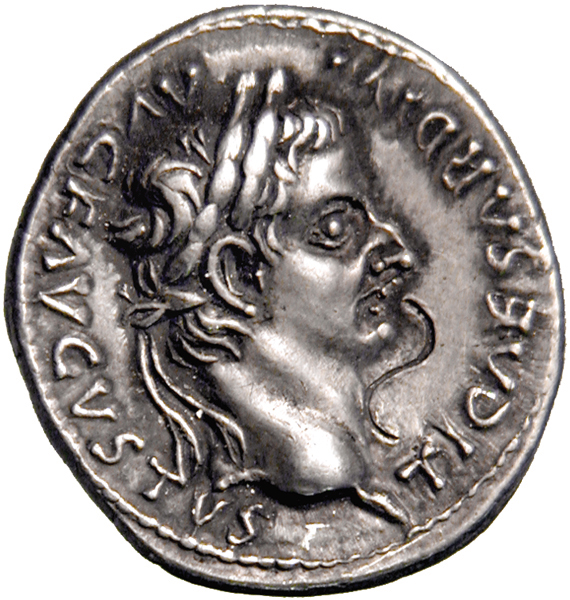
Rendering to God

“Render therefore to Caesar the things that are Caesar’s, and to God the things that are God’s.”  St. Matthew 22:21

It was quietly noted a few weeks ago that Treasury Secretary Steve Mnuchin has declined to endorse an Obama administration plan to put Harriet Tubman on the $20 bill.  His predecessor, Jacob Lew, saw honoring the great antislavery hero as the first step in redressing a historic imbalance in the way we have honored national heroes.  The $20 bill was a convenient place to start, as Andrew Jackson has come under fire in recent years for his slaveholding and for his decision to forcibly remove Indians to the West along the infamous Trail of Tears.   

But Andrew Jackson also happens to be one of President Trump’s personal heroes.  The President honors Jackson as a brave soldier, and a symbol of democracy, the first true man of the people to be elected to our nation’s highest office.  The president laid a wreath at Jackson’s tomb as part of the 250th anniversary celebration of his birth and has hung a painting of him in the Oval Office.[1]  You can be sure that Old Hickory won’t be leaving the currency on his watch. 

The debate over the $20 bill has caused some impassioned repartee, at least among the sort of people who frequent the Facebook page of this former history major. 

Wednesday, May 10, 2017

Praying, Not Electioneering


Last Thursday was the National Day of Prayer. US Presidents have designated days of prayer, fasting and thanksgiving since the very beginning of our republic.  Our earlier prayer books had liturgical forms for these occasions, which were once quite prominent and numerous.  The National Day of Prayer, as an annual, recurring spring event is relatively modern, though.  It was resolved by Congress in 1952, in the dark days of the Korean War, at the urgent prompting of then young and dynamic evangelist, Billy Graham.

Prayer services for our nation and its leaders are held across the country on this day, including sometimes in the White House and on Capitol Hill.  I’ve participated in at least one ecumenical service for the day, and at Evening Prayer last Thursday at Saint Francis, we included a petition for the President and the Congress, nodding to the occasion.  Our leaders need our prayers, especially at times of great change.  It’s surely a good thing to gather people of different creeds and traditions to ask God for wisdom and courage for those who face such daunting challenges.

But this year’s National Day of Prayer will be remembered for something else as well.  At the White House event marking the occasion, President Trump announced his decision to sign an executive order directing the IRS not to enforce the Johnson Amendment, part of the US Tax Code.  The amendment is nearly as old as the Day of Prayer itself, having been authored by then-senator Lyndon B. Johnson in 1954.  It also reflects a time when religion had a more prominent role in American public life.  The amendment essentially says that churches, like other non-profit organizations, risk losing their tax-exempt status if they endorse political candidates. 

By a stroke of the pen, President Trump has given a wide berth for American religious institutions to dramatically expand their involvement in the political system.  To my mind, that’s a very bad thing. 

Monday, November 14, 2016

A Taste of What Could Be

“This will give you an opportunity to testify… for I will give you words and a wisdom that none of your opponents will be able to withstand or contradict.”  St. Luke 21:13-14

The senior warden and I were having lunch a few weeks ago over at the Hunter’s Inn, and I asked the waiter if the reuben was any good.  I am, you see, a one sandwich man, and that sandwich is the reuben.  If it’s Friday, I’ll have the fish and, on occasion, the special.  But if I’m out for lunch, it’s usually a reuben.  If I’m to live here for many years to come, I need to figure out who serves the best reuben in Potomac. 

So, I asked the waiter the important question: “is the reuben any good?”  And he was that rare bird, the waiter of probity.  He answered me, “Well, people like it.  But I’m from New York, and they toast it here instead of grilling it.  It’s just not the same.” 

And I thought to myself, I know just what he means.  Because I, too, have been to New York, even unto Katz’s Delicatessen on the Lower East Side, where they make reubens of Biblical proportion. 

Friday, November 11, 2016

Ponder: "Cynicism is always a practical failure."

“Christians will not quite be able to agree with President Obama’s statement that we are all Americans first. But Christians in our country are at least Americans second, and we should strive to be good ones as the president has urged, by presuming the good faith of our fellow citizens and seeking common ground whenever and wherever these may be had. Prescinding from the process, perhaps to keep our hands clean, is not helpful, and cynicism is always a practical failure, rooted in spiritual despair.

These are, in fact, Christian encouragements that we should know well and be expert in exemplifying, modern political democracy being, after all, a Christian bequest to the secular world in the wake of our own wars of religion and recrimination. The school of Christian unity-in-truth, indeed the gospel itself, includes politics properly practiced in the classical sense, and in the sense presumed by our commitment and call to good order, governance, and shared faith (see Eph. 4).

It would be hard to think of a better theme for the season of Advent, which inculcates preparation for the promised apocalypse of our Lord: the final revelation and unveiling of his return, judgment, and right ordering of all things. As Scripture and our tradition teach, these are always upon us, in this time between the times, and they form our faith and hope for both justice and mercy. Their practical payoff is due “fear” that leads to humility and awe in the face of our fleeting and fragile lives; repentance for our sins, not shifting blame to others (Luke 18:9-14); resolve to remain focused on the most important, ultimate concerns; and the commitment to living faithfully in the interim, that is, with courage, joy, and confidence in the promises of God.”

Christopher Wells, “Come, Lord Jesus; Get Back to Work.”  Covenant. 11 Nov. 2016

Friday, January 15, 2016

Ponder: "a world where you get what is coming to you"

"The good news is that Americans don't settle for poor government performance.  The bad news is that they may not see their own inconsistent demands--ever-lower taxes, ever-better services--as part of the problem.
It will take sacrifice, preferably shared, to solve the country's long-term deficit and many other structural problems.  Leaders who constantly tell their constituents, in effect, "ask what your country can do for you" are not preparing them for that.
The current political usage of "deserve,"  in short, is about validating grievances, not settling priorities among them.  The word, meant in that way, probably would not have escaped the lips of Daniel Patrick Moynihan.
That memorably mordant sociology professor worked for presidents of both parties in the '60s and '70s and got elected senator of New York as a Democrat in 1976--despite his belief that, as he once put it, "for most persons, it would be exceedingly painful to live in a world where you get what is coming to you."
Charles Lane, The Politics that We Deserve."  The Washington Post 16 Jan 2016, A23.

Friday, December 11, 2015

Ponder: Doubt a little of his own infallibility

“Perhaps all of us, and especially Trump, could take a page from history, from the words of Benjamin Franklin after the writing of a new Constitution.  The debate had been hot and heavy.  There were deep feelings on all sides, and many were expressing strong reservations about signing it.  In calling for ratification, Franklin said, ‘On the whole, sir, I cannot help expressing a wish that every member of the convention who may still have objections to it, would with me, on this occasion, doubt a little of his own infallibility, and to make manifest our unanimity, put his name to this instrument.

Were we to doubt a little of our own infallibility, perhaps we might find it within ourselves to listen, to give a little more care to viewpoints that differ from ours, expressing the hope that those who voice them care just as much for and believe just as firmly and fervently in their causes as we do in ours.  We might find the gift if a solution.”


William Brock, The U.S. Political Devolution.”  The Washington Post 11 Dec. 2015, A25