Showing posts with label idolatry. Show all posts

Monday, October 23, 2017

Rendering to God

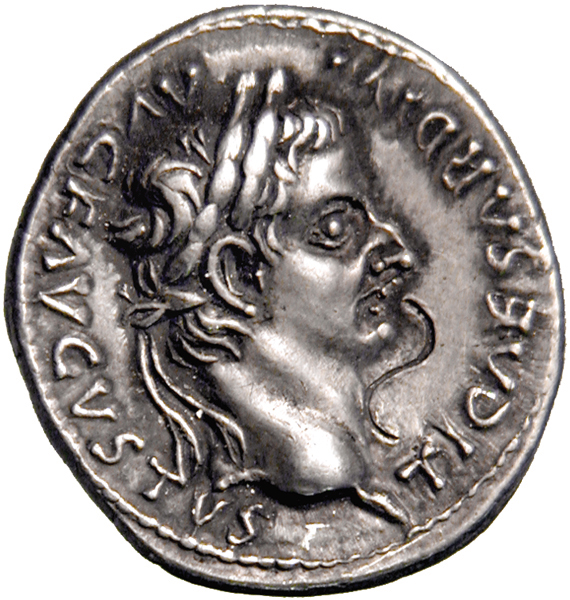
“Render therefore to Caesar the things that are Caesar’s, and to God the things that are God’s.”  St. Matthew 22:21

It was quietly noted a few weeks ago that Treasury Secretary Steve Mnuchin has declined to endorse an Obama administration plan to put Harriet Tubman on the $20 bill.  His predecessor, Jacob Lew, saw honoring the great antislavery hero as the first step in redressing a historic imbalance in the way we have honored national heroes.  The $20 bill was a convenient place to start, as Andrew Jackson has come under fire in recent years for his slaveholding and for his decision to forcibly remove Indians to the West along the infamous Trail of Tears.   

But Andrew Jackson also happens to be one of President Trump’s personal heroes.  The President honors Jackson as a brave soldier, and a symbol of democracy, the first true man of the people to be elected to our nation’s highest office.  The president laid a wreath at Jackson’s tomb as part of the 250th anniversary celebration of his birth and has hung a painting of him in the Oval Office.[1]  You can be sure that Old Hickory won’t be leaving the currency on his watch. 

The debate over the $20 bill has caused some impassioned repartee, at least among the sort of people who frequent the Facebook page of this former history major. 

Monday, October 16, 2017

He Remembers We Are But Dust

Your people, whom you brought up out of the land of Egypt, have corrupted themselves;
they have turned aside quickly out of the way which I commanded them.  Exodus 34:7-8

Last week, the University of Chicago’s Richard Thaler was awarded the Nobel Prize in economics.  Thaler will go down in history as the man who slew homo economicus

If it’s been awhile since Econ.101, you might not remember that homo economicus was that mysterious creature that sprung fully formed from the brain of classical economists: the person who made all his decisions based on careful calculation and enlightened self-interest.  Homo economicus would plan carefully for retirement by setting aside savings early to benefit from compound interest.  If the price of gasoline dropped, he would use the discount in other areas of life instead of buying more expensive gasoline. He will value his own possessions accurately and sell them if there is an opportunity for gains. 

Richard Thaler suspected that many people were not quite so logical.  So he started asking them, conducting studies.  What he found is that people are predictably irrational about their economic decisions.  They make different choices when they are afraid, or when they have developed attachments.  They maintain habits even when they are destructive. They spring for the quick pleasure and ignore the long term need.

Human beings are not as strong, wise or noble as economists had expected they were.  

Friday, November 11, 2016

Ponder: "No shortcuts to this freedom"

“In the Bible, freedom is an ambiguous word. It was a very great good for the Israelites to be liberated from slavery in Egypt! But the very first thing the children of Israel did with their freedom was worship a golden calf. And so God brought them to Mt. Sinai, where they were given the Law and commanded to teach it to their children’s children. They were given the Temple, to worship God and make atonement for sin. They were given the land and a king in Zion. But the children of Israel worshiped idols all the same, and their kings became lovers of power and money, and the twelve tribes turned on each other. And so in the fullness of time they were given the Lamb of God and the King of Kings, the great deliverer from every enemy and the perfect atonement for sin. In the Church we are given all of this too, by God’s grace. Blessed be the Lord, the God of Israel! For in Christ’s body we are set free to worship him without fear, all the days of our life (Luke 1:74).

Here is no rigged system, but a God in whose service is perfect freedom, in whose Son is pardon and deliverance from all our sins, and in whose Church is perfect communion, as all join together with one voice in praise and thanksgiving, now and forever. Amen!

There are no shortcuts to this freedom: no way to get there without God and his saving and sanctifying gifts. Insofar as American freedom has told us that we could, it has all been a lie, just another golden calf. Insofar as our church has bought into this lie, we too have bowed the knee to Baal. But God has given us everything we need to follow him now, without any fear. We have the Word to teach to our children’s children. We have the gospel to proclaim, sins to confess and absolve.”


Jordan Hylden, “Free to Worship Him Without Fear.”  Covenant.  11 Nov. 2016

Monday, October 10, 2016

Ponder: "companions in shipwreck, not guiding stars"

"There is in our Western culture the romantic chivalric tradition still strong, though as a product of Christendom (yet by no means the same as Christian ethics) the times are inimical to it. It idealizes 'love' — and as far as it goes can be very good, since it takes in far more than physical pleasure, and enjoins if not purity, at least fidelity, and so self-denial, 'service', courtesy, honour, and courage. Its weakness is, of course, that it began as an artificial courtly game, a way of enjoying love for its own sake without reference to (and indeed contrary to) matrimony. Its centre was not God, but imaginary Deities, Love and the Lady. It still tends to make the Lady a kind of guiding star or divinity – of the old-fashioned 'his divinity' = the woman he loves – the object or reason of noble conduct. This is, of course, false and at best make-believe. The woman is another fallen human-being with a soul in peril. But combined and harmonized with religion (as long ago it was, producing much of that beautiful devotion to Our Lady that has been God's way of refining so much our gross manly natures and emotions, and also of warming and colouring our hard, bitter, religion) it can be very noble. Then it produces what I suppose is still felt, among those who retain even vestigiary Christianity, to be the highest ideal of love between man and woman. Yet I still think it has dangers. It is not wholly true, and it is not perfectly 'theocentric'. It takes, or at any rate has in the past taken, the young man's eye off women as they are, as companions in shipwreck not guiding stars. (One result is for observation of the actual to make the young man turn cynical.) To forget their desires, needs and temptations. It inculcates exaggerated notions of 'true love', as a fire from without, a permanent exaltation, unrelated to age, childbearing, and plain life, and unrelated to will and purpose. (One result of that is to make young folk look for a 'love' that will keep them always nice and warm in a cold world, without any effort of theirs; and the incurably romantic go on looking even in the squalor of the divorce courts)."


J. R. R. Tolkein, "A Letter to Michael Tolkein, 6-8 March, 1941"