Showing posts with label sacrifice. Show all posts

Monday, October 23, 2017

Rendering to God

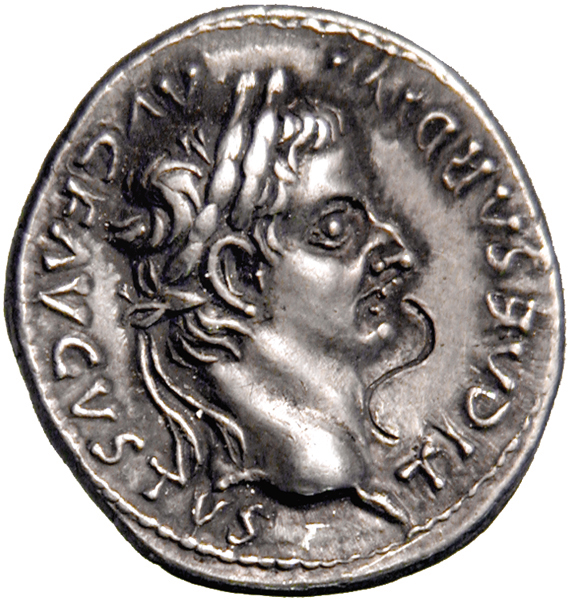
“Render therefore to Caesar the things that are Caesar’s, and to God the things that are God’s.”  St. Matthew 22:21

It was quietly noted a few weeks ago that Treasury Secretary Steve Mnuchin has declined to endorse an Obama administration plan to put Harriet Tubman on the $20 bill.  His predecessor, Jacob Lew, saw honoring the great antislavery hero as the first step in redressing a historic imbalance in the way we have honored national heroes.  The $20 bill was a convenient place to start, as Andrew Jackson has come under fire in recent years for his slaveholding and for his decision to forcibly remove Indians to the West along the infamous Trail of Tears.   

But Andrew Jackson also happens to be one of President Trump’s personal heroes.  The President honors Jackson as a brave soldier, and a symbol of democracy, the first true man of the people to be elected to our nation’s highest office.  The president laid a wreath at Jackson’s tomb as part of the 250th anniversary celebration of his birth and has hung a painting of him in the Oval Office.[1]  You can be sure that Old Hickory won’t be leaving the currency on his watch. 

The debate over the $20 bill has caused some impassioned repartee, at least among the sort of people who frequent the Facebook page of this former history major. 

Tuesday, September 12, 2017

In Remembrance

“This day shall be for you a memorial day, and you shall keep it as a feast to the Lord.”
Exodus 12:14

The Exodus story is one of the Bible’s most vivid and dramatic narratives.  The wickedness of Pharaoh, the steadfast courage of Moses, the horrors of the plagues, the spectacle of the the Red Sea’s high waves, frozen in place—they almost seem, to us to demand a screenplay.  There have been plenty of Exodus movies, from Cecil DeMille’s great 1956 epic The Ten Commandments, to the animated Prince of Egypt, a favorite in our household.  Earlier this week, I asked my sons if they knew about the ten plagues, and was very impressed when they could reel off all ten of them.  “Did you cover that in Sunday School?” I asked.  “No dad,” came the response—"it’s in the movie.”

I didn’t ask them if they had been reading about the Exodus directly from the Bible. But if they had tried, they would have found a story paced quite differently from any film I’ve seen.[1]  It’s not that the filmmakers need to invent lots of episodes.  All the powerful stuff comes right off the pages.  It’s that they usually leave out much of what the Book of Exodus actually says. 

Friday, February 24, 2017

Ponder: "if you limit your options"

Freedom is largely squandered if exercised as a series of provisional commitments. In such a case, the mind, heart, and soul and the body’s work in the world are never constrained or fixed to some point of irrevocable commitment. No work is deeply engaged, no love profoundly embraced. This is a gospel example of freedom: “Therefore a man leaves his father and his mother and clings to his wife, and they become one flesh” (Gen. 2:24). A declaration of consent confirms this is done freely and without compulsion. A decision is made and other options summarily cut off. If faith, hope, and love remain, this can be a freedom of decades, a holy vow loosed by death alone. This too is an example of gospel freedom: A legendary Latin teacher speaks of his early dreams. “When I was seven I decided to become a priest. In my teens I decided to join the Carmelites and hoped to become a Latinist and Latin teacher.” More than 50 years later, these three remain: priesthood, monasticism, Latin brilliance. “It’s amazing,” the Rev. Reginald Foster opines, “what you can do if you limit your options.”

Sunday's Readings, The Living Church, 12 Feb. 2017

Friday, January 20, 2017

Behold the Lamb

“The next day he saw Jesus coming toward him, and said, "Behold, the Lamb of God, who takes away the sin of the world!”  St. John 1:29

I wonder if you have chosen your seat in church for a particular reason.  A few years ago, one of my parishioners told me that she had thought a good deal about it before settling on her choice. A dear friend, a rather holy woman, had once sat week by week in the pew in front of her.  She didn’t really hear that well, so being nearer the pulpit was useful.  But really, she chose the pew because it had the best angle for viewing both her favorite stained glass window and the Altar Cross. Seeing both those things allowed her to concentrate her mind when she prayed and helped her to feel that God was near.

I could understand just what she meant, because I too had a favorite seat, the rector’s stall at Saint Paul’s Church in Sharpsburg.  Because there I had a perfect view of the Lamb.  There was a tiny window in the wall of the chancel just opposite the rector’s pew, a lamb with a halo, bearing the flag of victory.  Jesus, the Lamb of God who takes away the sin of the world.  No one could see it but me, but I saw it constantly, as I sat and listened to the readings, as I turned to the people to pronounce the Word of Absolution or to approach the pulpit to preach, as I turned to the Altar to pray.

Monday, October 10, 2016

Ponder: "the true way of all your loves upon earth"

“Out of the darkness of my life, so much frustrated, I put before you the one great thing to love on earth: the Blessed Sacrament. .... There you will find romance, glory, honour, fidelity, and the true way of all your loves upon earth, and more than that: Death: by the divine paradox, that which ends life, and demands the surrender of all, and yet by the taste (or foretaste) of which alone can what you seek in your earthly relationships (love, faithfulness, joy) be maintained, or take on that complexion of reality, of eternal endurance, which every man's heart desires.”


J. R. R. Tokein, “A Letter to Michael Tolkein, 6-8 March, 1941”

Ponder: "companions in shipwreck, not guiding stars"

"There is in our Western culture the romantic chivalric tradition still strong, though as a product of Christendom (yet by no means the same as Christian ethics) the times are inimical to it. It idealizes 'love' — and as far as it goes can be very good, since it takes in far more than physical pleasure, and enjoins if not purity, at least fidelity, and so self-denial, 'service', courtesy, honour, and courage. Its weakness is, of course, that it began as an artificial courtly game, a way of enjoying love for its own sake without reference to (and indeed contrary to) matrimony. Its centre was not God, but imaginary Deities, Love and the Lady. It still tends to make the Lady a kind of guiding star or divinity – of the old-fashioned 'his divinity' = the woman he loves – the object or reason of noble conduct. This is, of course, false and at best make-believe. The woman is another fallen human-being with a soul in peril. But combined and harmonized with religion (as long ago it was, producing much of that beautiful devotion to Our Lady that has been God's way of refining so much our gross manly natures and emotions, and also of warming and colouring our hard, bitter, religion) it can be very noble. Then it produces what I suppose is still felt, among those who retain even vestigiary Christianity, to be the highest ideal of love between man and woman. Yet I still think it has dangers. It is not wholly true, and it is not perfectly 'theocentric'. It takes, or at any rate has in the past taken, the young man's eye off women as they are, as companions in shipwreck not guiding stars. (One result is for observation of the actual to make the young man turn cynical.) To forget their desires, needs and temptations. It inculcates exaggerated notions of 'true love', as a fire from without, a permanent exaltation, unrelated to age, childbearing, and plain life, and unrelated to will and purpose. (One result of that is to make young folk look for a 'love' that will keep them always nice and warm in a cold world, without any effort of theirs; and the incurably romantic go on looking even in the squalor of the divorce courts)."


J. R. R. Tolkein, "A Letter to Michael Tolkein, 6-8 March, 1941"

Sunday, September 18, 2016

Ponder: unselfishness, the sign of God's kingdom

"Dorothy Day wrote, 'Patience, patience--which means suffering.' Her life of sacrificial service to the poor was one of great power that places her in the first rank of Christians who will be remembered...Dorothy Day's commitment to a sacrificial life arose from a place of strength, not a place of weakness.  Such a life, rightly understood, is uniquely empowering because it is aligned with the self-giving of God in Christ.  Wherever there are gracious acts of unselfishness, there are the signs of God's kingdom of remade relationships based on mutual self-offering.

Fleming Rutledge, The Crucifixion (2014), 275.

Tuesday, February 23, 2016

The faith in the waiting


“But he said, "O Lord GOD, how am I to know that I shall possess it?"”  Genesis 15:8

Abram had learned to wait.  God had spoken to him powerfully, when he was a man in the prime of life, living in the great Mesopotamian city of Ur.  “"Go from your country and your kindred and your father's house to the land that I will show you.[1]”  And he had gone, following this strange God and his lavish promises. God told him of an abundant land.  He promised wealth.  And most poignantly, he told of a multitude of descendants.  Abram would be the father of a great nation. 

God had spoken to him once more, when his protégé, Lot had set off to make his own way in the world.  Again, there were the same promises, the assurance that God would be faithful.  That was decades ago, though.  Abram amassed cattle and slaves, he dabbled in politics, he became an elder statesman among the tribes of the Palestinian desert. He’d just been through a rather fierce battle, which has a way of clarifying your perspective, I’m told.  But still there were no children.

And Abram was tired of waiting. 

Friday, January 15, 2016

Ponder: "a world where you get what is coming to you"

"The good news is that Americans don't settle for poor government performance.  The bad news is that they may not see their own inconsistent demands--ever-lower taxes, ever-better services--as part of the problem.
It will take sacrifice, preferably shared, to solve the country's long-term deficit and many other structural problems.  Leaders who constantly tell their constituents, in effect, "ask what your country can do for you" are not preparing them for that.
The current political usage of "deserve,"  in short, is about validating grievances, not settling priorities among them.  The word, meant in that way, probably would not have escaped the lips of Daniel Patrick Moynihan.
That memorably mordant sociology professor worked for presidents of both parties in the '60s and '70s and got elected senator of New York as a Democrat in 1976--despite his belief that, as he once put it, "for most persons, it would be exceedingly painful to live in a world where you get what is coming to you."
Charles Lane, The Politics that We Deserve."  The Washington Post 16 Jan 2016, A23.

Thursday, November 19, 2015

For Meditation: We are in the golden age

Don’t look to the 1st century church or some other age as the golden age of Christianity which is lost and shall never be found again.  We are in the golden age of Christianity because Jesus Christ is with us, if we are with Him.  And Jesus Christ has offered to us all of His things which He offered to Paul, Timothy, Epaphroditus, and the Philippians: joy in Christ, a serious sense of the high calling in Christ, bowels of compassion, a life of sacrifice, a love that spontaneously and zealously seeks out the good of others, and an intimate sense of Jesus Christ dwelling in us as we see Him working in His body.
Charles Erlandson, "Thursday of Trinity 24."  Give Us This Day

Wednesday, November 18, 2015

For Meditation: Unity is Not Achieved Without Mutual Sacrifice

"The agreement forged required mutual submission to the conscience of the other within the mixed-economy of the Jewish-Gentile church. Jewish Christians had to trust that the Gentiles were living according to the standards of the community in which they were inaugurated by baptism, and they had to forego their strict standards of absolute assurance regarding kosher purity. Gentiles, on the other hand, had to forego a freedom that was available in Christ, but was not conducive to united fellowship. Paul’s command that Spirit-filled members of a mixed-economy church would “submit to one another out of reverence for Christ” (Eph. 5:21) served as an ongoing reminder that ecclesial unity is not achieved without mutual sacrifice.
Paul Wheatley, Boundaries, Blessings and Hope for the Future.

Sunday, November 8, 2015

We Have Failed, But He Has Triumphed

“He has appeared once for all at the end of the age to remove sin by the sacrifice of himself.”
Hebrews 9:26

Yesterday, the government of Singapore hosted a historic meeting between Xi Jinping, the president of Mainland China and Ma Ying-jeo, the president of Taiwan.  Technically, China and Taiwan are still engaged in a civil war, and it was the first meeting between the leaders of the countries in sixty years.  Many people are hoping for reconciliation.  China and Taiwan share a common language, history and culture.  Both are important economic powers, and there would be advantages in trade and security cooperation.

But with a bloody war and decades of hostile rhetoric behind them, it’s almost impossible for the leaders to know how to speak with each other.  They agreed not to call one another president, because that would suggest that both lead legitimate governments.  No flags can be displayed.  Neither president has the freedom to promise another meeting or to make substantial proposals for common action.  The words they do use must be chosen with extreme delicacy, because anything either leader says could call up old associations and deeply offend the other, perhaps touching off internal scandals that would only make things worse.  In its impotency, its nervous gesturing, what it most reveals is just how far off the goal of normalized relations really lies. 

Wednesday, September 16, 2015

Commentary: Saint Augustine's Prayer Book (2014 Edition)


From the Sept. 20 Edition of The Living Church.
My copy of Saint Augustine’s Prayer Book is battered and stained.  A constant companion since my earliest days as an Episcopalian, it has pointed me to God through difficult times of discernment, the death of loved ones, and many of my life’s greatest joys.  I greeted the news of its pending revision with the suspicion associated with a change to grandma’s pie crust recipe or a new route to the family vacation spot at the beach. 
But the new edition, edited by David Cobb of Ascension Church, Chicago and Derek Olsen has exceeded my expectations.  In his preface, Cobb notes his “genuine affection” for the book, which shines through this very careful and gentle revision of one of the greatest spiritual classics produced within the American Church.  The new volume is more than 100 pages longer, beautifully designed, and a convenient size.
Above all, the new edition is a tribute to the devotional usefulness of the 1979 Book of Common Prayer.    The work’s opening section defines its purpose, in part, as helping Christians “prepare for and participate in public liturgy thoughtfully.”  Past editions of Saint Augustine’s Prayer Book claimed to be a “devotional companion to the Book of Common Prayer,” but relegated the prayer book to the shadows.