Showing posts with label death. Show all posts

Wednesday, November 15, 2017

The faith of an alto: remembering Grandma

“Therefore are they before the throne of God, and serve him day and night within his temple.”  Revelation 7:15       

Grandma was an alto.  I learned this when I joined the choir as a ten year old, before my voice changed.  Mom placed me on the second row, between grandma and grandpap.  The joke was that this was for the sake of public order.  It took advantage of the fact that grandpap could only hear well in his right ear.  It kept me at a bit of a distance from those other tenors and basses who always had a joke to tell at the wrong moment.  But really, I think, it was so I would learn from grandma what it meant to be part of a choir.

Altos don’t get to sing the melody, like the sopranos, and they aren’t generally given dramatic leaps or catchy rhythms like basses.  They hold the middle voice and keep the beat.  Sometimes they will sing pretty much the same note for whole lines of music.  The other voices rise and fall, but altos are steadfast, anchoring the other members of the choir and drawing them together into a sound that is all the richer and more vibrant for their humble contribution. 

There isn’t any choral singing without altos—just lots of performers vying for attention, delighted in the sound of their own voices.  The blend is the truly beautiful thing about choral singing.  It relies on listening to each other, and requires that some must take the humbler place, offering their best as a form of service to the whole, giving what they have in love that does not seek for recognition or honor. 

Saturday, November 4, 2017

Working Through Grief: A Sermon for All Souls Day

“I look for the LORD, my soul doth wait for him, in his word is my trust.”  Ps. 130:5

My father died of a sudden heart attack when he was 54.  I was 27, working my first real job, married for a month, and completely unprepared for navigating the rest of my life without my father’s guidance and support. 

It was the most traumatic thing I’ve ever experienced.  I know that doesn’t say very much compared to what many of you have endured.  But for me, it meant deep personal sadness at the loss of a man I deeply admired and who brought so much joy into my life.  It meant concern at the even more intense grief that my mother, my grandparents and my brother were experiencing.  And the experience left me feeling adrift, more hesitant and uncertain about the future, with a kind of fear in my heart I had never really known before.

I was deeply grateful that I knew I could pray for my father, with words that the church had placed in my mouth, when it was so difficult to know just what to say to God about it all.  My father died on a Sunday afternoon, and he was buried on a Wednesday.  The next Sunday morning I went to his grave, and I took with me a little volume, The Priest’s Book of Private Devotions, marked for the page for the Vespers for the Dead. 

Wednesday, November 1, 2017

In a Season of Elegy and Hope

The Episcopal Church lost one of its great lights when Richard Wilbur died on October 14, aged 96.  Wilbur was one of the greatest American poets of the twentieth century, our nation’s second poet laureate, twice awarded with the Pulitzer Prize. At a time when his rivals often seemed to need vulgarity and extremism to attract public attention, Wilbur wrote beautiful and lyrical lines, often full of deep gratitude and profound hope. 

He was faithful member of his local Episcopal parish in the Boston suburbs, where a friend of mine was his rector for a time.  He kept a prayer book on his bedside table, and his confident faith colors the generosity and patience that mark his work.  Episcopalians may know him best for his striking Christmas hymn, A Stable Lamp is Lighted (#219).  Set to one of David Hurd’s arresting tunes, it weaves together the Nativity, the chaos and glory of Holy Week, and the hope of final restoration. 

I had another of his poems on my mind this week, In the Elegy Season, one of his first to receive wide acclaim. 

Tuesday, September 12, 2017

In Remembrance

“This day shall be for you a memorial day, and you shall keep it as a feast to the Lord.”
Exodus 12:14

The Exodus story is one of the Bible’s most vivid and dramatic narratives.  The wickedness of Pharaoh, the steadfast courage of Moses, the horrors of the plagues, the spectacle of the the Red Sea’s high waves, frozen in place—they almost seem, to us to demand a screenplay.  There have been plenty of Exodus movies, from Cecil DeMille’s great 1956 epic The Ten Commandments, to the animated Prince of Egypt, a favorite in our household.  Earlier this week, I asked my sons if they knew about the ten plagues, and was very impressed when they could reel off all ten of them.  “Did you cover that in Sunday School?” I asked.  “No dad,” came the response—"it’s in the movie.”

I didn’t ask them if they had been reading about the Exodus directly from the Bible. But if they had tried, they would have found a story paced quite differently from any film I’ve seen.[1]  It’s not that the filmmakers need to invent lots of episodes.  All the powerful stuff comes right off the pages.  It’s that they usually leave out much of what the Book of Exodus actually says. 

Sunday, April 2, 2017

In the House of Affliction

In the liturgical calendar, today, the Fifth Sunday in Lent, marks the beginning of Passiontide, when we shift our attention to Christ’s suffering and death. In the congregations where I have served before, we would mark this day by covering all the crosses in the church with purple veils.  This isn’t your practice here, probably because of the number of yards of purple cloth it would take to cover that cross suspended from the ceiling over the Altar. 

But it remains fitting to grapple with this Gospel text, the story of the raising of Lazarus, on this day.  The Book of Isaiah describes death as “the covering that is cast over all peoples, the veil that is spread over all nations.[1]”  Even if there are no cloth veils in the sanctuary, the events of the story we have just heard are shrouded by death’s power. 

Lazarus, is of course, a man destined to die from the beginning of the story, and he will rest in the tomb for four days before Jesus arrives.  His sisters are shattered with grief, and they are surrounded by a crowd of mourning friends, who seem to be trying, without much success to offer comfort.  Even the name of their village, Bethany, gives the measure of things—it means “the house of affliction[2]

Saturday, March 18, 2017

Praying the Passion with St. Bridget: A Holy Dying

Then Jesus, crying with a loud voice, said, “Father, into thy hands I commit my spirit!” And having said this he breathed his last.  St. Luke 23:46

Several of the Fifteen Os also make mention of a particular aspect of discipleship that was especially important in St. Bridget’s time, ending life in faith and trust, having what Jeremy Taylor famously described as “a holy dying.”  As she meditates upon the end of Jesus’ life, St. Bridget is also inviting us, as does the final stanza of one of the Victorian passion hymns, to “Learn of Jesus Christ to die[1]

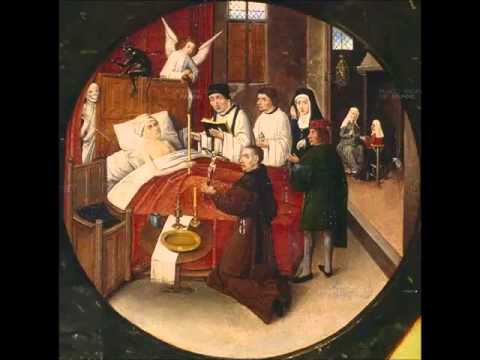
In her concern with a holy death, in part St. Bridget reflects the reality of her times.  She was surrounded by people, all of them baptized Christians, who died in unexpected ways every day.  An epidemic struck a village, an army laid siege to a town, a fire swept through a city, and thousands would die.  People lived perilous lives, and unlike the reality in the Western world today, there were very few means of effectively blunting the pain, so that most people were conscious and fully aware of death’s approach. 

Tuesday, January 10, 2017

"A Birth Like Death": A Sermon for Epiphany

“And being warned of God a dream that they should not return to Herod, they departed into their own country another way.” 
St. Matthew 2:12

Two different couples my wife and I know well have become parents for the first time in the last few weeks.  It’s been exciting to watch this very special time unfold in their lives, as they find themselves changing in ways they could never have understood.  One of the new dads told me the other day that he was supposed to head out of town for a conference next month.  But he just didn’t know if he could handle being away from his son for that long, that long being three days.

Our friends find love and joy drawn out of them in new ways, even as the demands of an infant bring all sorts of complications to the relatively well-ordered lives they had been leading before.  Enterprising, well-educated people aren’t used to having responsibility for creatures who cry and cry, but don’t give the slightest indication about what they really need.

Sleeping schedules, meal times, ways of socializing, eventually the furniture and the layout of the house—everything must be altered to accommodate the baby’s needs. “Having a baby changes everything.”  We told them this before, and they nodded politely, as you do at those transitions in life when everyone seems to feel entitled to pose as an advice columnist.  But now I’ve heard it from their lips as well.  I’ve seen that knowing look in their eyes.

Sunday, November 27, 2016

The Passing Bell's Question

“Now it is high time to awake out of sleep: for now is our salvation nearer than when we believed.”  Romans 13:11

I walked down the street from the hospital with my faith renewed, full of joy, grateful to be a priest.  I had been called in a few hours earlier because Gertrude Worrall, my oldest parishioner, had reached the end.  She was 98, baptized at Christ Church when William Howard Taft was president, a saintly woman, greatly loved by her family.  They had surrounded her in the hospital room, four or five generations of them.  We’d prayed and sang hymns together.  There was laughter and tears, and she was delighted by all of it until she slipped peacefully away.  It may sound very odd if you haven’t seen one, but there are beautiful deaths, and sometimes, as a priest, I’m invited to be part of them.

I was walking a few inches above the sidewalk as I made my way back to the church to put away my stole and the communion kit.  And I decided this would be just the moment to expand the use of the passing bell at Christ Church. 

Monday, August 22, 2016

Ponder: "we live as hedonists and die like Platonists"

"No longer seeing death, our focus is now ever more on the body.  We exercise and look after our body more than any previous generation, and we might do so under a veneer of Christian theology, arguing that ours is an 'incarnational faith' in which the body is the temple of the Spirit.  But then at death, when the coils of the mortal flesh are discarded, we think of the 'person' as liberated from the limitations of the body.  Today we live as hedonists and die as Platonists!
In a very real sense, we no longer see death today.  We don't live with it as an ever-present reality as has every generation of human beings before us.  To put it most extremely: today we must be killed in order to die.  What we call 'life' is capable of being sustained indefinitely by machines in an ICU; they must be switched off for the patient to die.  One cannot help but recall the warning in the final book of Scripture: 'And in those days, they will seek death and will not find it; they will long to die and death will fly away from them.'"
John Behr, The Joy of Life

Saturday, June 4, 2016

Ponder: "suddenly stripped clean of everything that once seemed so important"

“So then, Charlie was to receive the last rites in full: he would be anointed, he would make his confession, he would receive Holy Communion—the old ritual that sees us from this world.  And as I watched the Franciscan go up the stairs, led by Helen, who was holding the prescribed lighted candle, and followed by the young doctor, once more I was almost overcome by the special feeling of this moment, this profound and unique movement that is like no other in time, this moment that is suddenly stripped clean of everything that once seemed so important, and in which nothing now matters but the limitless mercy of God.”


Edwin O’Connor, The Edge of Sadness

Saturday, March 26, 2016

Job's answer

“If a man die, shall he live again?  All the days of my service I would wait, till my release should come.”  Job 14:14

“I would wait,” Job said.  The Book of Job is full of unanswered questions, of frustrating riddles, disappointing shortcuts.  Job is in misery, and he cannot understand why.  His friends offer advice that rings hollow.  They blame him for things he knows he never did.  They claim logic and justice in God that Job cannot see.  Job has lost everything, he is at the point of death, hopeless and desperate.  But he will not give up.  He wants an answer, a trial where he can present his case, and a fair judgment will follow.  He wants to face God and know, once and for all, why all of this has come upon him. 

And in his quest, he runs head on into the great cul-de-sac of life.  Man is mortal, we all must die.  “We are of few days, he says, and full of trouble.”  We fade like a flower, we are cut down like a tree, we dry up like a pond.  God has allotted us a few days, and after that there is no more.  We will never rise, even if the whole created order falls to pieces.  After death, there is nothing.  No man gets his answer.

Sunday, January 3, 2016

Ponder: "a dramatic climax"

"Some of the watchers were drooping from weariness, but not one showed any wish to go home.  Watching beside a death-bed was not a hardship for them, but a privilege,--in the case of a dying priest it was a distinction.
In those days, even in European countries, death had a solemn social importance.  It was not regarded as a moment when certain bodily organs ceased to function, but as a dramatic climax, a moment when the soul made its entrance into the next world, passing in full consciousness through a lowly door to an unimaginable scene.  Among the watchers there was always the hope that the dying man might reveal something of what he alone could see; that his countenance, if not his lips, would speak, and on his features would fall some light or shadow from beyond.  The "Last Words" of great men, Napoleon, Lord Byron, were still printed in gift-books, and the dying murmurs of every common man and woman were listened to and treasured for their neighbours and kins-folk.  These sayings, no matter how unimportant, were given oracular significance, and pondered by those who must one day go the same road."
Willa Cather, Death Comes for the Archbishop, 169-170

Tuesday, December 29, 2015

Happy Infant, Early Blest

We have escaped like a bird from the snare of the fowlers; the snare is broken, and we have escaped.”  Psalm 124:7

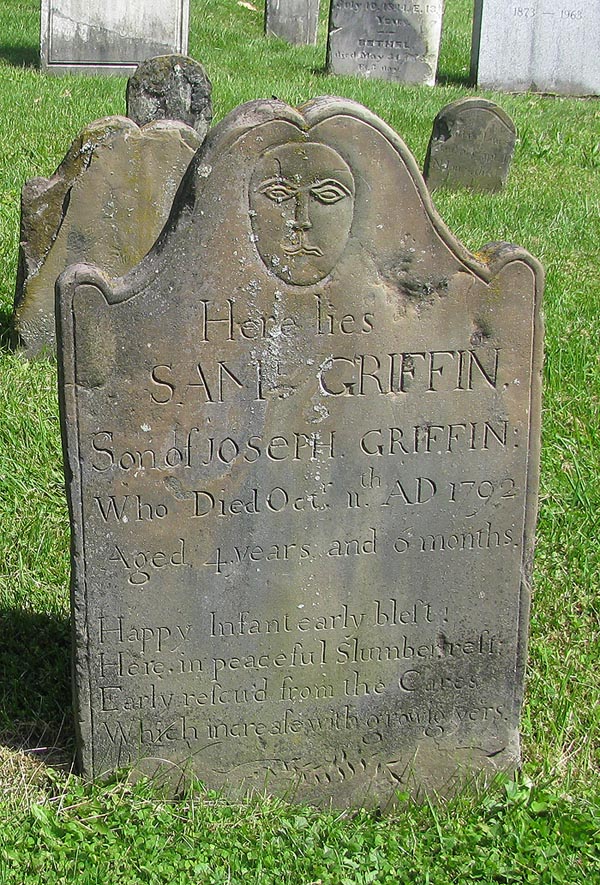
A few yards from the door of this chapel lies the grave of Samuel Griffin, the first person to be buried on this spot.  He died on October 11, 1792, accidentally drowned in the lake at the age of four years, six months.  On his stone, you can still barely pick out the epitaph verses:
            Happy infant, early blest
            Here in peaceful slumber rest
            Early rescu’d from the cares
            Which increase with growing years.

Now, I don’t know about you, but I find that epitaph hard to swallow.  It’s hard for me to imagine those as the words chosen by his mother, the ones that seemed to fit best as she held him dripping and cold in her lap at the shore of the lake. 

I guess it just sounds too easy.  Killed tragically while still a young boy, his whole life ahead of him—is that “happy infant, early blest.”  I’m sure they tried their best, but no one could save him, he had to die in such a frightening way—is that really “early rescued from the cares?”  Surely these words would speak only to someone who wasn’t ready to be honest about the real devastation of such a death—surely they’re trying to put a bright face on things when everything is falling apart inside?  

Saturday, December 19, 2015

O Key of David

O Key of David and Sceptre of the house of Israel, Who dost open and no man doth shut, Who dost shut and no man doth open, come and bring forth from his prisonhouse the captive that sitteth in darkness and in the shadow of death.

He would turn up for the grand occasions in the Chapel when I was a student at Duke.  He was an old man, very distinguished with a craggy face, an emeritus professor of chemistry.  His doctoral robe was Harvard Crimson, and he wore a velvet cap.  And he carried an enormous jeweled staff, with a wide silver head, the mace of the University.  His title was the University Marshall, and that staff represented, I think, the teaching authority.  He bore on behalf of the faculty, who had chosen them to represent him.  When he carried it in on Matriculation Ceremony, or on Founders’ Day or for Baccalaureate, and laid it upon the Altar, it announced to all of us that the university could now get about its business, that the teachers would teach, that students could learn.  He walked very slowly, because he knew that everyone had to wait for him.  His mace was the key that opened the proceedings of a great university.

Tuesday, November 24, 2015

For Meditation: Feelings for holy men in winter

“Such is the frame of mind which befits the end of the year; and such the frame of mind which comes alike on good and bad at the end of life. The days have come in which they have no pleasure; yet they would hardly be young again, could they be so by wishing it. Life is well enough in its way; but it does not satisfy. Thus the soul is cast forward upon the future, and in proportion as its conscience is clear and its perception keen and true, does it rejoice solemnly that “the night is far spent, the day is at hand,” that there are “new heavens and a new earth” to come, though the former are failing; nay, rather that, because they are failing, it will “soon see the King in His beauty,” and “behold the land which is very far off.” These are feelings for holy men in winter and in age, waiting, in some dejection perhaps, but with comfort on the whole, and calmly though earnestly, for the Advent of Christ.”


J. H. Newman, quoted in Will Brown’s “The Deterioration ofNature: On the Running Out of Time.”  Covenant.  24 Nov. 2015

Friday, May 15, 2015

For Meditation: Jesus is Angling for You

From my morning reading--Cyril of Jerusalem, quoted in John Laurence's The Sacrament of the Eucharist.  

"Perhaps you did not know whither you were coming or in what kind of net you are taken.  You have come within the nets of the church.  Be taken alive and flee not.  For Jesus is angling for you, not in order to kill, but by killing to make you alive.  For you must die and rise again."  (20).

Wednesday, May 6, 2015

For Meditation: "It cannot be attuned and untuned at once"

From my morning reading, Hughson's With Christ in God.

"In sin, man casts out grace, deadens his own ear until God's voice sounds fainter and fainter, and comes seldomer, and at last there follows the stillness of death.  It is heard no more.  God leaves the soul, and it is dead.  Every wilful sin is a part of this deadening of the soul.  Ye cannot wilfully refuse to hear in one way or at one time, and hear at another.  Ye cannot stop your ears to part of God's message, hear and not hear at will.  The soul is a beautiful instrument, attuned by the hand of God, and breathed in by His Holy Spirit.  It cannot be attuned and untuned at once.  It cannot yield at once the harmony of heaven and the jarring discords of the world."  Edward Pusey, 208.