Showing posts with label evangelism. Show all posts

Sunday, June 18, 2017

God visits His people in strangers

My lord, if I have found favor in your sight, do not pass by your servant… since you have come to your servant.”  Genesis 18:3,5

I picked up Sarge just outside of Oneonta, and told him I was only going as far as Cooperstown, but he was welcome to the ride.  He was familiar to me, a fixture of the Otsego County landscape, but we’d never spoken before.  Sarge was maybe 75, a thin man with leathery skin and squinty eyes.  He always wore a garrison cap and an olive-green army uniform, with a few medals sprinkled across the chest.   No one was quite sure if he had actually earned them or if they were just window dressing.  But in patriotic upstate New York, Sarge could hitch his way from one end of the county to another by just putting on a good show. 

He began talking the moment he sat down and kept it up for a solid half hour, a rambling discourse mostly about old cars, and the evils of politicians.  Looking over after about twenty minutes, he noticed I was a clergyman and launched into a discussion of true Christians and hypocrites.  Sarge had been to most of the churches in these parts, he assured me, and he could certainly tell the difference between them.  Catholics wouldn’t give a man like him the time of day, and would you believe that they once ran him out of a Pentecostal church because he stood up to speak his mind during the service.  But Methodists—they laid on the best spread for coffee hours, and sometimes the fellas would even slip him a few cigarettes. 

It did cross my mind as he opened the door to go his way that Sarge could well have been a kind of messenger.  I was a little relieved that he didn’t seem to know anything about Episcopalians, so he hadn’t turned up in my congregation and discovered that we came up short.  Wouldn’t it be just like God to separate the true believers from the false ones by the way they responded to a mysterious stranger?

Sunday, June 4, 2017

A Little Bird Told Me

“We hear them telling in our own tongues the mighty works of God."  Acts 2:11

“A little bird told me”—that was one of my grandmother’s favorite phrases.  My grandparents lived a mile down the road from us, and many an evening she and Pap would come over after supper.  She usually brought “guess packages”—paper bags with some crackers or cookies, maybe even a bottle of pop—things my mother rarely bought.  Before we could put in our guesses and win the prize, she wanted a little chat.  Small boys, especially when distracted by the prospect of a cookie, are not very conversational, and she would prompt us a bit: “a little bird told me that someone had two base hits last night.” “A little bird told me that someone threw a fit about taking out the garbage.”

Of course, we all knew well that my mother was the “little bird,” and I probably thought that “little bird” was a special nickname for my mother at first.  But it’s an old saying, though I don’t hear it much anymore.  I have a source of secret knowledge, it means.  You don’t need to know how I learned it, but I know something important about you. 

It’s quite a strange phrase, really—talking birds revealing hidden messages.   Some folklorists attribute it to an ancient tale about King Solomon, and there’s also an obscure Norse legend about a hero who tastes dragon’s blood and can immediately comprehend the speech of the birds—it turns up in the second act of one of Wagner’s operas.  The phrase definitely predates Twitter, though.  Most scholars attribute it to an offhand remark in the Biblical book of Ecclesiastes, which warns against cursing the king in your bedchamber, lest “a bird on the wing report what you say.[1]” 

Monday, March 20, 2017

The Frog Hollow of Palestine

“When the Samaritans came to him, they asked him to stay with them; and he stayed there two days. And many more believed because of his word.”  St. John 4:40-41

I’ve seen the sign on the left-hand side of the Harper’s Ferry Road: “Frog Hollow, the Moonshine Capitol of the World.”  I think it’s a bit tamer down in the Hollow these days than it was during the height of Prohibition, when a man would sit watch on the bridge on a summer’s night in case a revenue agent came creeping down the road with an axe and an ultimatum from the IRS. 

Until it burned down a few years ago, though, the center of community life in the hollow was the Mad Dog Saloon.  They say the floors were dirt and they traded in canned beer out of a Coleman cooler, when the locally produced wares weren’t being passed around.  Saturday nights were punctuated with ambulance calls, when one of the hollow boys was wont to get a bit dramatic with the cue stick.  I lived for two years in Sharpsburg, just five miles away. But I never had the guts to cross the threshold of the Mad Dog and see if all the stories were really true.

Wednesday, October 12, 2016

Ponder: "in their difficulties they know the suffering Christ"

“This is why I want a Church which is poor and for the poor. They have much to teach us. Not only do they share in the sensus fidei, but in their difficulties they know the suffering Christ. We need to let ourselves be evangelized by them. The new evangelization is an invitation to acknowledge the saving power at work in their lives and to put them at the centre of the Church’s pilgrim way. We are called to find Christ in them, to lend our voice to their causes, but also to be their friends, to listen to them, to speak for them and to embrace the mysterious wisdom which God wishes to share with us through them.   Our commitment does not consist exclusively in activities or programmes of promotion and assistance; what the Holy Spirit mobilizes is not an unruly activism, but above all an attentiveness which considers the other “in a certain sense as one with ourselves”. This loving attentiveness is the beginning of a true concern for their person which inspires me effectively to seek their good. This entails appreciating the poor in their goodness, in their experience of life, in their culture, and in their ways of living the faith. True love is always contemplative, and permits us to serve the other not out of necessity or vanity, but rather because he or she is beautiful above and beyond mere appearances: “The love by which we find the other pleasing leads us to offer him something freely”.  The poor person, when loved, “is esteemed as of great value”,  and this is what makes the authentic option for the poor differ from any other ideology, from any attempt to exploit the poor for one’s own personal or political interest."
Pope Francis, Evangelii Gaudium 197-198.

Saturday, October 1, 2016

Ponder: "capable of filling life with new splendor"

“Every form of catechesis would do well to attend to the ‘way of beauty’ (via pulchritudinis).  Proclaiming Christ means showing that to believe in and follow him is not only something right and true, but also something beautiful, capable of filling life with new splendor and profound joy, even in the midst of difficulties.  Every expression of true beauty can thus be acknowledged as a path leading to an encounter with the Lord Jesus...If, as Saint Augustine says, we love only that which is beautiful, the incarnate Son, as the revelation of infinite beauty, is supremely lovable and draws us to himself with bonds of love.  So a formation in the via pulchritudinis ought to be part of our effort to pass on the faith."


Pope Francis, Evangelium Gaudii, 167.

Ponder: "the first proclamation must ring out over and over"

"The kerygma is trinitarian.  The fire of the Spirit is given in the form of tongues and leads us to believe in Jesus Christ who, by his death and resurrection, reveals and communicates to us God's infinite mercy.  On the lips of the catechist the first proclamation must ring out over and over: "Jesus Christ loves you; he gave his life to save you; and now he is living at your side every day to enlighten, strengthen and free you.'  This first proclamation is called 'first' not because it exists at the beginning and can then be forgotten or replaced by other more important things.  It is first in a qualitative sense because it is the principal proclamation, the one which we must hear again and again in different ways, the one which we must announce one way or another throughout the process of catechesis, at every level and moment."


Pope Francis, Evangelium Gaudii, 164.

Wednesday, September 28, 2016

Ponder: "the bride bedecked with her jewels"

"In the diversity of people who experience the gift of God, each in accordance with its own culture, the Church expresses her genuine catholicity and shows forth 'the beauty of her varied face.'  In the Christian customs of an evangelized people, the Holy Spirit adorns the Church, showing her new aspects of revelation and giving her a new face.  Through inculturation, the Church 'introduces peoples, together with their cultures, into her own community,' for 'every culture offers positive values and forms which can enrich the way the Gospel is preached, understood and lived.'  In this way, the Church takes up the values of different cultures and becomes sponsa ornata monilibus suis, 'the bride bedecked with her jewels' (c.f. Isaiah 61:10)."


Pope Francis, Evangelium Gaudii, 116.

Tuesday, July 5, 2016

"Get your butt in church"

“Whatever house you enter, first say, `Peace to this house!' And if anyone is there who shares in peace, your peace will rest on that person.” St. Luke 10:5-6

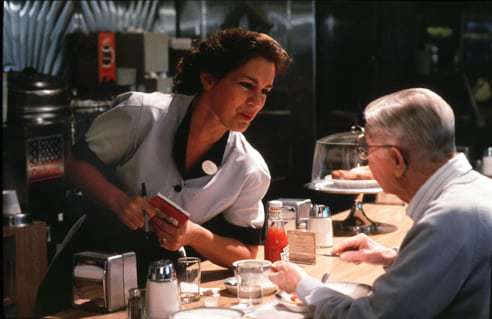
Sally[1] was our most effective evangelist at a parish where I once served.  She would warn me ahead of time when she was bringing another one with her.   I’d walk into the chancel Sunday morning and look back at her pew, on the aisle halfway down the right side, and see a new face.  The newcomer might be slightly puzzled, a little uncertain; but also glad to be right next to someone who obviously knew what she was doing.  Most every time the bishop came, Sally would present a candidate or two for confirmation, someone she’d walked alongside in the journey to faith, another person who had found peace with God and the gift of new life. 

Sally had no advanced degrees in theology.  I couldn’t even get her to come to Bible study.  She was a humble woman, without great wealth or social power.  She had what I secretly regarded as one of the most unpromising opening lines in the history of evangelism.  I heard her use it at least twice, and winced a bit both times.  She would look people right in the eye, sigh a bit, and simply say, “you need to get your butt in church.”  You should know that this phrase is not from the New Testament, and I’m sure it’s not recommended by the Episcopal Church’s canon for evangelism.  But over and over again, through the unseen work of the Holy Spirit, Sally said it and it worked. 

Sally had more than her share of opportunities to use that line in her job.  For much of my time as her rector, she was a waitress at Frank’s,[2] a diner much loved by locals, because it was about the only restaurant in our tourist town that stayed open all year round.  When you suffer through an upstate New York winter, it’s not hard to become very loyal to the one place that serves bacon cheeseburgers the second week of February. 

Thursday, June 2, 2016

Ponder: "the carnival shill approach to the church"

“I’ve always disliked and mistrusted this carnival shill approach to the church—and yet heaven knows we see it often enough.  Does it really work?  I don’t think so, but more than that I think it’s all wrong.  Because for one thing it’s so unworthy.  I don’t mean by this that it’s too informal, too much in the marketplace, too “popular;” I do mean, quite simply, that it’s cheap.

Obviously, when you talk about such things as God, religion, the church, man’s soul, to a great many different people, you much necessarily do so in a great many different ways and on a great many different levels.  But none of these levels can be—or at least none of them should be—in any sense flashy or false or vulgar, because if they are—no matter what the apparent justification—you run the very serious risk of making God, religion, the church, and man’s soul seem just a little bit of the same.  It’s all very well to suggest that this really doesn’t matter so much, that what does matter is that, as a result, the people come in, but I think that’s a great mistake.  I know they come in—and often in considerable numbers—in response to such techniques.  That’s not surprising. 

Ponder: "We do not strategize"

We are never inventing, or constructing the Church anew, as if your congregations or dioceses or national structures — as if Israel — could be invented anew or constructed by the Israelites. The issue is not invention; it is always and ever “obedience.”

We tend to pursue our ministries on a continuum between activism and quietism, which orders most of our lives: do this; build that; organize, strategize. Clergy conferences are all about that, as are all the books and blogs of the world. And if that’s too much — as it surely is — we then give in to fatigue, withdraw, hide. Most clergy end up doing that.

But there is an alternative continuum to the activism/quietism spectrum. It is simply to do what God asks; to follow where God leads. And only that. No more, no less.

Saturday, April 9, 2016

ACC Hears Reports of Crises

From The Living Church, 9 Apr 2016.

LUSAKA, Zambia — The deep needs of local churches and opportunities for joint action across the Anglican Communion were topics of discussion by the Anglican Consultative Council. Evangelization, discipleship, the worldwide migration crisis, climate change, and violence were identified as urgent global issues.

The Rev. Philip Groves, director of the Anglican Communion’s Continuing Indaba project, led the exercise. Participants reflected in small groups on the Five Marks of Mission developed by the ACC, and to discuss needs and priorities that are emerging in their local contexts.

Sunday, March 27, 2016

Public Address System

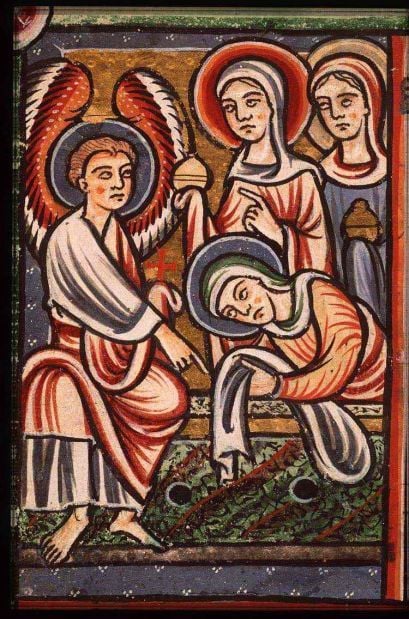
“The men said to them, ‘Why do you look for the living among the dead?  He is not here, but has risen.’”  St. Luke 24:5

The Metro, as you know, is having trouble.  There are serious concerns about financial sustainability, loads of deferred maintenance, diminishing public trust.  They’ve recruited a no-nonsense administrator, Paul Wiedefeld, to put things in order.  Earlier this month, he shut the whole thing down for a day to repair the electric cables.  The grumbling was universal.  It also made for a very crowded Panera in Herndon and may well have proved that we can run the Federal government just fine out of Fairfax County so long as we have decent wi-fi. 

We’re told that the cables are now all ship-shape, and they will be on to additional projects.  And I, at least am hoping they will soon move on to the public address system.  Because if you have spent much time on Metro, you will know just how impossible it often is to understand what is being announced to you.  “Next station..mmmfmfm” or “The train will be delayed…ffhghf.”  I think the announcers were trained by the adults on those old Charlie Brown cartoons.  It’s really pretty bad.  If I’m travelling by Metro, I need to stand near the Metro map so I can tell what’s coming next.

Monday, March 7, 2016

I believe in the Apostolic Church


“All this is from God, who through Christ reconciled us to himself and gave us the ministry of reconciliation; that is, in Christ God was reconciling the world to himself, not counting their trespasses against them, and entrusting to us the message of reconciliation.” 
II Corinthians 5:18-19

 Brazil has been in the news a great deal the last few weeks, as public health officials struggle to contain the Zika virus.  It is the latest in a series of challenges surrounding the country’s first opportunity to host the Olympic games, which will be held in Rio in July.  There’s still quite a bit of work to be done—mosquitoes to control, bays to clean up, stadiums to be completed.  And time is running short. 

 It was recently announced that the Olympic torch will be lit on the 21st of April at the ancient city in Greece where the games were first held millennia ago.  And though the games themselves are still very much a work in progress, the plan for moving the torch across the country, the Southern Hemisphere’s largest, are pretty astounding.  The torch will go on a 95 day tour around Brazil, visiting all 26 state capitals, as well as 500 other towns.  12,000 runners will carry it, passing the torch from hand to hand, covering a total distance of 20,000 km by road,[1] until it reaches its final destination and was used to light the great flame in the Olympic Stadium at the opening of the games.

What we call the apostolicity of the Church is that way in which the Church is so much like that torch that will be passed from hand to hand across Brazil. 

Friday, November 27, 2015

Are we done with the '79 Prayer Book?

Reblogged from Covenant.

After twenty years of pastoral use, we have discovered that, like all its predecessors, it is not a perfect book and could stand some general improvement in some fairly critical places. But I believe the Church has other mission imperatives that require its energy and attention at the present time …. We are nowhere near being finished with what this book is calling us to do. For a variety of reasons, I suspect that most of the Episcopal Church is neither ready to abandon the 1979 prayer book nor willing to commit the time and resources required to replace it. — Neil Alexander, Leaps and Boundaries, pp. 183-184

The Episcopal Church was different in 1997, when these words were penned by Neil Alexander, then a professor of liturgics and preaching at General Theological Seminary. Average Sunday attendance across the church was over a third higher. We had more dioceses, seminaries, and central boards and agencies. There were no Millennium Development Goals. There was a great deal less anxiety about the future. And the cross-marked volume in the pews was still known, fairly universally, as “the new prayer book.”

Sunday, October 18, 2015

The "Real Doctor's" Message

“And [God] gave skill to human beings that he might be glorified in his marvelous works.”
Sirach 38: 6

“Down in Guatemala,” he told me, “I had to be a real doctor, and it scared the heck out of me.”  Now don’t get me wrong, according to the standards of the American Medical Association and the licensing agencies of his rather lucrative specialty, my parishioner was very much a real doctor.  He had been in practice for decades and was highly regarded in our community, sought out by people in need of surgery.  But things were different, he was telling me, when he went to Guatemala on a medical mission trip with his son’s church. 

They were working in a remote area, with very minimal equipment, you see.  There were no MRI machines and it was a day’s journey over rugged roads for an x-ray.  They could do simple blood tests, and had a few diagnostic tools, and some basic medicines but that was about it.  My parishioner said he had learned all about diagnosis back in medical school, but it was so much easier just to run a test and be sure.  Here in Guatemala, he had to listen to the stories, mark just how people described their symptoms.  It was really challenging work, and he wasn’t certain about a few of the cases he had seen.  There were some maladies he just couldn’t treat. 

Malpractice insurance companies, of course, don’t tolerate this much guesswork here, and that’s probably a good thing.  But it was interesting to me that my parishioner didn’t think of his work within these narrow limits as useless.   “A real doctor,” that’s what he called himself, someone stretched to use all his ingenuity, to listen more carefully, to treat the whole person and not just the symptoms.  He left that time in Guatemala a bit wistful about the more accurate and lucrative way he practiced medicine the rest of the year, and anxious to get back again to a place where he really do justice to his profession.

Tuesday, June 30, 2015

To Completion--A Sermon for Pentecost V

“It is best for you now to complete what a year ago you began not only to do but to desire, so that your readiness in desiring it may be matched by your completing it out of what you have.”
  II Corinthians 8:10-11

As you would expect, there has been quite a bit of sorting going on in the Rectory these past few weeks.  We will move to our new and much smaller home in Virginia next week, and we’re using the situation to draw a clear line between the things we really need and those we can do without.  We’ve plumbed the depths of the cellar and the dusty corners of the attic, and pulled down all those boxes from the highest shelves of the closet.  And it’s amazing what you find in the process.

I’ve uncovered the relics of so many abandoned past projects.  There was a box of papers from my plan to write a proper scholarly history of my hometown, and cross-country skis and poles to go with those bindings I never bought.  There were bottles, tubes and corks from my summer as a home winemaker; Thackston’s Introduction to Syriac, and the list goes on and on.  I can hold these things in my hands and remember how excited I was to begin the project they represent: that crisp January day skiing around the golf course, picking and pressing all those fragrant mulberries, my hopes for new discoveries in early Christian liturgy.  But of course, over time, things became more difficult.  I gathered dozens of pages of notes for my history, but couldn’t find a unifying argument.  I produced wine from six different fruits, and it was uniformly undrinkable—no matter what color, it tasted exactly like musty Kool-Aid.  To my untrained eye, four of the letters of the Syriac alphabet looked identical, which makes getting through the sentences in the second lesson almost impossible.