Showing posts with label Lent. Show all posts

Sunday, March 5, 2017

Limiting Your Options

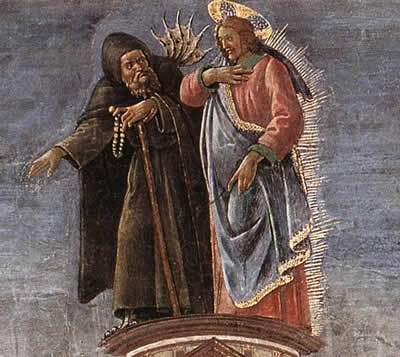
“Then Jesus said to him, ‘Begone, Satan! for it is written, ‘You shall worship the Lord your God and him only shall you serve.’”  St. Matthew 4:10

It was great to see last week that my college friend John has finally gotten engaged.  I found out the way the way you often do about these things when you’re my age, when a notice popped up halfway down my Facebook feed.  I haven’t seen John in two or three years, but he seemed about the same, his arm around a beautiful woman.  Both of them looked delighted, and frankly, a little relieved.

John’s all of 38 now, and after a conversation I had with him the last time we were together, I doubted that this day would ever come.  He was kind enough to put me up for the night in his apartment in Hell’s Kitchen the last time I was in New York.  John works in mergers and acquisitions at a big bank, knows a bit about everything, and has friends all over town.  Still no steady girlfriend, though. 

 “You don’t understand what it’s like dating here in the City,” John said to me over his plate of souvlaki.   A few months before he had signed up for Tinder, which was the hottest thing in dating technology at the time.  Tinder is sort of like internet matchmaking on steroids.  It sets up a date for you first thing in the morning by text message and you have an hour or two to decide if you’re in the mood for this option or if you’d like to try someone else instead.  

John had lots of dates.  I expect he had turned down two or three to have dinner with me. 

Thursday, March 2, 2017

Alms in Lent-For Repentance and Renewal

From The Sounds of St. Francis, 1 Mar. 2017

In the next few days, you’ll be receiving a letter from me and Barbara Heywood, the acting president of the Women of Saint Francis, about our Lenten offering appeal.  This is a new practice here at Saint Francis, and it is designed to take the place of the longstanding fall patron’s appeal that was an integral part of the Potomac Country House Tour. Following the Women of Saint Francis’ decision to indefinitely postpone the house tour, we decided that this Lenten appeal would be a helpful way to continue our longstanding emphasis on supporting ministries that serve the poor in our community and around the world.  The offering also helps us to recover a central aspect of the Lenten season and its distinctive disciplines that sometimes gets forgotten.

Lent is a season for almsgiving.  Throughout the forty days we examine our hearts and pray for forgiveness and renewal in the life of grace.  And giving of our treasure to relieve the sufferings of others expresses our gratitude to God for His mercy toward us and conforms us more fully to the sacrificial life of our Lord, who has given His life “a ransom for many” (Mark 10:45).

Wednesday, March 1, 2017

Ponder: "The Call of the Leader's Trumpet"

The true and dutiful children of the Church, the loyal soldiers of Christ Jesus will next Wednesday hear the call of their Leader’s trumpet, rousing them up, as on all Ash-Wednesdays, to set about his work, to fight his battle, in earnest. It will be the old note, but you will not therefore scorn it, if you are true men and brave soldiers. You know it would never do for a soldier, when the trumpet or bugle sounds in the morning, to say, “It is only the old call over again, what I have been used to so very often; I am not going to disturb myself for that,” and so to stay quietly in his quarters. No more will it do for you, Christian warriors, to make light of your Lord’s summons, now that he is calling upon you at the opening of another Lent; another holy season of penitent self-denial and prayers. He calls you morning by morning, and morning by morning, you must answer his call.”


John Keble, “Sermon XXI. Preparation for Holy Communion, Preparation for Death and for Judgment,” Sermons for Septuagesima to Ash-Wednesday, with Sermons for Confirmation and on the Litany. (1879).

Thursday, February 23, 2017

Forty Days Apart

From the Sounds of St. Francis, 23 Feb.

The Christian life is always a struggle across time.  To quicken the heart, to still the spirit, to tame the passions—these are the work of a lifetime, assisted by the grace the Holy Spirit supplies.  But the Scriptures consistently testify that the period of forty days opens us to God in a special way.  

Especially when focused by prayer and fasting and carried out in a withdrawal from the world’s haste and distraction, a period of forty days gives space for deepened communion with God.  Moses fasted for forty days before God revealed the commandments to him at Mount Sinai. Elijah fasted for forty days before receiving a vocation that would define the closing days of his ministry.  Jonah warned the Ninevites that they had only forty days to repent of their sins and to seek God’s forgiveness.  And of course, as we recall each year on the first Sunday of Lent, Jesus was sent forth by the Spirit into the wilderness to face the Devil’s temptations, fasting for forty days and discovering His saving mission. 

When the leaders of the early church were aiming to fix a period of public penance before notorious sinners could be readmitted to communion at Easter, forty days was the natural choice.  And when, a few centuries later, penance became privatized, it was only natural that all the faithful should be urged to a similar forty-day period to repent of their own sins in fasting and prayer, the period we still keep as the season of Lent. 

Friday, February 10, 2017

Bringing Back the 'Gesimas: A Liturgical Proposal

From Covenant, 10 Feb. 2017

My mother is a church organist, and my brothers and I spent many Saturday afternoons roaming freely around the church’s dusty corners while she worked out her footpedals and chose her stops for the next morning’s selections. Sometimes, when rehearsal was finished, we would help her find the numbers for the hymnboard that hung over the pastor’s chair.

The wooden box that held the hymn numbers also had a section for the words that made up the Sundays and festivals of the Church Year. We were Reformed, but the liturgy’s patterns were still important for us, and I knew most of the words on the black cards well enough: Advent and Lent, Christmas and Pentecost, New Year and Harvest Home.

The longest cards, though, at the back of the stack, were always a bit of a puzzle. They were shinier and less crinkled than the others, and obviously hadn’t been used in a long time. The names were certainly unusual: Quinquagesima, Septuagesima, Sexagesima. Young boys have rather vivid imaginations; I wondered just what kind of religious undertakings were intended for such occasions. Exotic ones, to be sure. Mother didn’t really know. The names sounded Latin, she thought, and maybe someone had sent our little church the Church Year cards intended for the Catholics or Episcopalians.

Tuesday, March 8, 2016

Ponder: "inexorably to the cross"

From then on, the direction of Lenten energy leads compellingly and inexorably to the cross, and what God accomplished there for all humankind. It’s not that our own individual selves and our own individual sins no longer matter: they matter immensely. They merely pale in significance alongside that which is their antidote, their remedy. As we move through Lent, the theme becomes “less of me and more of Jesus, less of me and more of us.” “We adore you, O Christ, and we bless you, because by your holy cross you have redeemed the world.”  This is in itself a school of holiness, a preparation for our eschatological destiny.

 Dan Martins, "The Morphology of Lent."  Covenant 4 Mar 2016

He came to himself

“He came to himself and said… ‘I will get up and go to my father, and I will say to him, “Father, I have sinned against heaven and before you.’” St. Luke 15:17-18

At first, of course, he blamed everyone else.  We would do the same, sitting there by the pigs, our bellies gnawing with hunger.  It had been quite a ride for a while: sharp clothes, fancy meals, all the wine he could drink, fast women.  He was on top of the world, a friend on every corner.  No rules, no boundaries, no regrets.  How in the world could it all have come to pieces so quickly? 

He blamed his parents, of course.[1]  Half the inheritance--they’d promised that’s what it amounted to, but it sure didn’t seem like very much.  And what about that responsible brother of his—if he’d have come to mind the books, well it wouldn’t have all slipped away so quickly.  He blamed all those who called themselves his friends, and sponged on his good nature, all those who’d tricked him into schemes and promised to pay him back in a month’s time.  Who wouldn’t blame a thief—the dealer with the weighted dice, the pickpocket who snatched the sack from his coat, the women who left his bed before dawn.  It was the fault of tailors who made shiny clothes that wore thin too quickly, tavern men who overcharged for cheap food.  And this wretched famine—who could have seen it coming.  This master he was serving—surely he could pay more.  Surely he could find some work with more dignity.  He cursed his lot.  He cursed his enemies.  He cursed life itself, and then stared back at the pigs, and he would have climbed down into the trough beside them if he could.

He was miserable, of course.  But there’s a kind of steadfastness that can come with misery, especially when we are so certain it’s all someone else’s fault. 

Sunday, March 6, 2016

Ponder: "the Sacrament, the Wilderness, Fasting"

"Ambrose of Milan noted that “there are three things which united together conduce to the salvation of man: the Sacrament, the Wilderness, Fasting” (Catena Aurea on Luke 4). The first and the last of these three conduits of salvation come naturally into sharper relief during Lent. But the middle term, the Wilderness, is seldom considered other than as an abstraction connoting the sort of quiet and solitude one may find in one’s own room with the door shut (Matt. 6:6).

But Jesus and his first disciples appear to have taken the wilderness more literally, spending time in wild places to cultivate communion with the Creator, not least, one may surmise, by beholding his works unmediated. One thinks of the 40 days in the wilderness at the beginning of Jesus’ public ministry, how the Gospels show him regularly seeking out lonely places (Luke 4:42), or how Paul withdrew for a time into the vastness of Arabia after his conversion (Gal.1:17). One thinks too of the withdrawal of Christians into the wildernesses of upper Egypt and Cappadocia and such places during the fourth century, at the foundation of Christian monasticism.

Wednesday, February 10, 2016

The Springtime of the Fast has come


“And when you fast, do not look dismal, like the hypocrites.”  St. Matthew 6:16

When I was a junior in college, I spent my spring semester studying Greek and Byzantine history in Athens.  One of things about my time that I remember most vividly was the way that the Greeks celebrated this particular season, the days right around the beginning of Lent.  A time of feasting and celebration led up to the beginning of Lent, which comes on a Monday for the Orthodox.  I went to a costume ball, and spent two days in an island village where the natives dressed in goatskins and danced in the streets to celebrate the Carnival.  The wine flowed.  Meat was grilled out in the streets, as the butchers worked to empty their shops before the fast began. 

And then, on Clean Monday, as they call the first day of Lent there, everything changed.  The simple cafĂ© where we took most of our meals switched over to Lenten fare: fish roe salad, bean soup and big blocks of sesame-seed cake.  On the afternoon of Clean Monday, in the big park by the ruins of the ancient temple of Olympian Zeus, the skies were filled with color.  The Greeks fly kites on the first day of Lent, kites of all shapes and colors, kites shaped like birds and flowers and dragons, some with streamers blazing. 

The beginning of Lent is a kind of celebration for them, because with its disciplines comes an opportunity for the renewal of the soul.  In Lent, one of my Greek friends told me, the fasting helps our souls rise up like the kites, we can soar, free from our sins.  An antiphon from the Orthodox liturgy of the week before Lent expresses the kind of joy in the fast that the kite flying shows so boldly:  “The springtime of the Fast has dawned,” it says, “the flower of repentance has begun to open.”[1]