Showing posts with label Satan. Show all posts

Sunday, March 5, 2017

Limiting Your Options

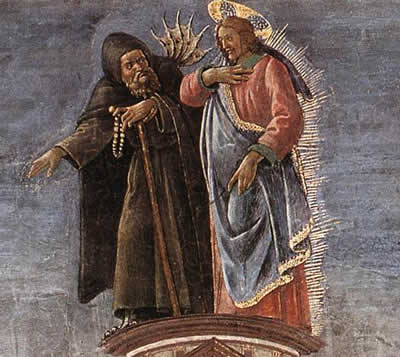
“Then Jesus said to him, ‘Begone, Satan! for it is written, ‘You shall worship the Lord your God and him only shall you serve.’”  St. Matthew 4:10

It was great to see last week that my college friend John has finally gotten engaged.  I found out the way the way you often do about these things when you’re my age, when a notice popped up halfway down my Facebook feed.  I haven’t seen John in two or three years, but he seemed about the same, his arm around a beautiful woman.  Both of them looked delighted, and frankly, a little relieved.

John’s all of 38 now, and after a conversation I had with him the last time we were together, I doubted that this day would ever come.  He was kind enough to put me up for the night in his apartment in Hell’s Kitchen the last time I was in New York.  John works in mergers and acquisitions at a big bank, knows a bit about everything, and has friends all over town.  Still no steady girlfriend, though. 

 “You don’t understand what it’s like dating here in the City,” John said to me over his plate of souvlaki.   A few months before he had signed up for Tinder, which was the hottest thing in dating technology at the time.  Tinder is sort of like internet matchmaking on steroids.  It sets up a date for you first thing in the morning by text message and you have an hour or two to decide if you’re in the mood for this option or if you’d like to try someone else instead.  

John had lots of dates.  I expect he had turned down two or three to have dinner with me. 

Tuesday, June 21, 2016

Ponder: "by his patience, laid low the cruel one"

"Thus blessed Job, when stricken with the loss of his substance and with the death of his children, forasmuch as he turned the force of his anguish into praise of his Creator, exclaiming The Lord gave and the Lord taketh away; as it hath pleased the Lord, so is it done; blessed be the Name of the Lord: by his humility, struck down the enemy in his pride, and by his patience, laid low the cruel one.  Let us never imagine that our combatant received wounds and yet inflicted none.  For whatever words of patience he gave forth to the praise of God, when he was stricken, he as it were hurled so many darts into the breast of his adversary, and inflicted much sorer wounds than he underwent, for by his affliction he lost the things of earth, but by bearing his affliction with humility, he multiplied his heavenly blessings."
Gregory the Great, Morals in Job, II.21

Monday, June 20, 2016

The healing we need

Then all the people of the surrounding country of the Gerasenes asked him to depart from them.  St. Luke 8:37

Our hearts have been broken this week, as we have read and watched coverage of the killing of 49 people at the Pulse nightclub in Orlando.  Saint Paul urges us to “weep with those who weep,”[1] and this has been a week for tears and prayers.  So many people slain in the prime of life, hatred that is difficult for us to comprehend—the world seems a darker and more dangerous place. 

Allison and I had been in Orlando the week before last for a theology conference.  We had dinner a mile and a half from the nightclub the evening before the tragedy.  “It could have been us,” we thought.  If you are gay or Latino, I imagine you may be feeling much more threatened.  Another unpredictable act of gun violence, another undetected terrorist, one of us turned against all of us.  “How long will it last?” we ask ourselves.  Is this just how it will be for us now?  

Monday, February 15, 2016

True Power and the Test of Ambition

“And the devil said to him, “To you I will give their glory and all this authority; for it has been given over to me, and I give it to anyone I please.  If you, then, will worship me, it will all be yours.  St. Luke 4:6-7

 “If anything unites America in this fractious moment,” says the New York Times’ David Brooks in a recent column, it is a widespread sentiment that power is somewhere other than where you are.”[1]  “The Republican establishment thinks the grass roots have the power,” he continues, “but the grass roots think the reverse. The unions think the corporations have the power but the corporations think the start-ups do. Regulators think Wall Street has the power but Wall Street thinks the regulators do.”  He goes on to cite a recent Pew study which asked Americans, “Would you say your side has been winning or losing more?” Sixty-four percent of us, majorities of both parties, believe our side has been losing more.

People respond to this feeling of powerlessness, Brooks says, with “pointless acts of self-destruction.”  When we believe we have no power, compromise is suspicious.  If we believe we have no power, utopian dreams seem the only possible escape.  If we have no power, we must get behind the one who promises to “start winning again,” no matter what real abilities he might have to keep his promise.   This sense of powerlessness, Brooks says, is very dangerous in a political system like ours, which attempts to draw together a deeply diverse society through common citizenship and shared institutions. 

Tuesday, September 29, 2015

Wonderful Order: A Sermon for Michaelmas

"Now war arose in heaven, Michael and his angels fighting against the dragon; and the dragon and his angels fought, but they were defeated and there was no longer any place for them in heaven."  Revelation 12:7-8.

I heard all about the Hall of Fame inductions this weekend—the ones that people around here seem to really make a fuss over—as opposed to the one that makes so many leave town in July.  It’s homecoming weekend at the high school, which means the annual induction into the CCS Sports Hall of Fame.  Not being an alumnus myself, I wasn’t invited, but I expect it was quite a grand occasion.  There was a nice dinner, plenty of backslapping all round, stories of the glory days.  And when the names were announced and the plaques unveiled, of course, there were speeches.

And we all know what sorts of things were said.  But how does a great athlete explain himself or herself?  Who should be thanked for the accomplishments that are still remembered, so many years later? These questions aren’t as easy to answer as we sometimes assume.  God, of course should be thanked—for the natural talent, protection from harm.  But who else lies behind the success?  An attentive coach, most likely, but was it really the one who designed the flashy plays for the varsity team, or the one back in Little League who taught you how to swing?  Was it the teammate who sent all those sweet passes your way, or the one who shamed you into dropping the attitude and getting with the program?  Was it Mom, cheering from the sidelines at every game, or great-granddad, whose smooth hands somehow became yours, even though he never saw you catch a ball? 

Perhaps it was all of them, but that generalization doesn’t really make the question any easier to answer.  There is a kind of mystery that lurks behind the good things in our lives.  No one cause stands alone.  No one person deserves all the credit, it’s all so interconnected.