Showing posts with label legacy. Show all posts

Sunday, August 6, 2017

The Eighth Day of their Lives

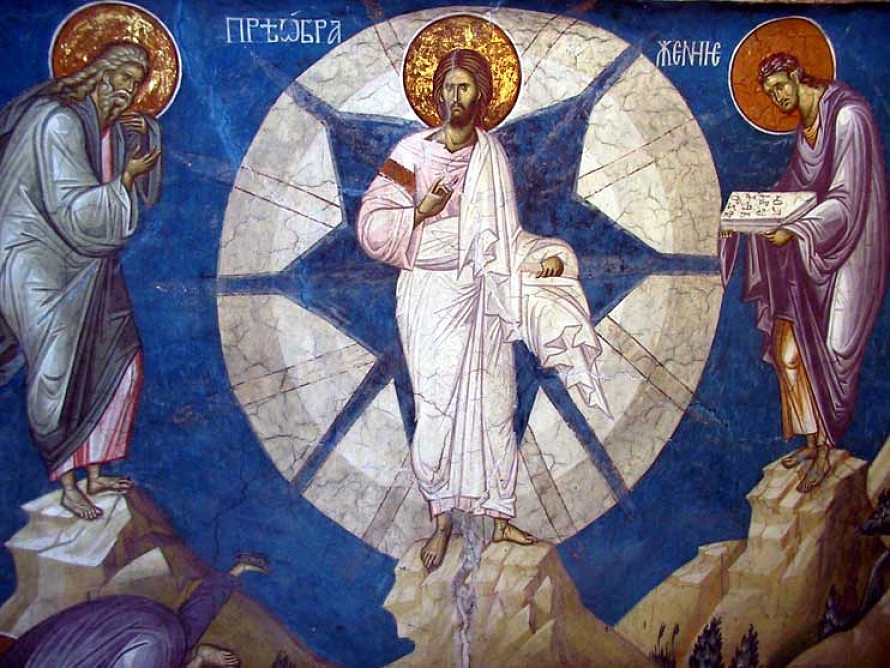
“And behold, two men talked with him, Moses and Elijah, who appeared in glory and spoke of his departure, which he was to accomplish at Jerusalem.”  St. Luke 9:30-31

Over the last few months, I’ve had several conversations with people who are staring down retirement.  Some friends are leaving their work with a deep sense of satisfaction, ready to take on some long-postponed projects.  Others are worried about how they will fill the time and are looking for a way to hang in for a few more years.  One friend was doing the most fruitful and fulfilling work of his career, but the funding ran out, and he’s facing part-time work, something quite different.  It might be marvelous, but I don’t think he’s completely sold on it yet. 

In the back of most of those conversations lay a series of questions I suspect we’ve all asked ourselves, even if retirement lies half a lifetime away: “Does my life add up? Does it have meaning, this work into which I have poured so much of my time and energy?  Do I have a legacy?”  It’s worth reminding ourselves that our privilege allows us to ask these questions of our work.  Most people in history and most people in the world today simply must toil on until their bodies give way.  But for all people, life is unpredictable, full of unexpected shifts, confusing blessings and overwhelming sorrows.  We long to understand where our lives are headed, how their true meaning will be revealed.  But so often, in the end, there is only confusion.  We see ourselves only through clouds of smoke, beset by doubt and fear. 

Monday, November 21, 2016

Our Crowns at His Feet

“He is the head of the body, the church; he is the beginning, the firstborn from the dead, so that he might come to have first place in everything.”  Colossians 1:18

I went to see a friend recently who has come to a certain age, and is in the process of moving from her grand old house into a retirement community.  She’s made the decision with proper deliberation, and she knows it’s the right choice.  A smaller space means freedom for her, the ability to age with more dignity and grace.  But it’s a challenging and sometimes sorrowful task to sort through all these things that fill her old house, and to make those inevitable decisions about what can be taken and what must be left to others.

She wanted me to see the house in all its glory, before the packers descended, stirring up the dust and setting things ajar.  She led me from room to room, and told me the stories behind the furniture and the pictures on the wall.  This piece was her grandmother’s and that one she spotted at a sale in the rain and bought it for a song.  The friend who painted that picture has been gone for years, but this artist went on to become a smashing success.  The things we gather together over a lifetime do clutter our houses and accumulate ever so much dust.  But they are the tangible signs of our memories.  They express our relationships.

My friend seemed most excited about the things in the house she was preparing to send on to others.   A local museum in her grandfather’s home town had agreed to take a few items that couldn’t really fit in anyone’s drawing room.  Her son had said he would like to have a cherished collection.  She was surprised by that.  He’d never shown so much interest when she’d tried to explain all the parts to him before.  But she smiled when she thought about how he had already decided where it would fit in his own home.  She would make him notes about where each piece had come from, why it was significant.  He would never be able to remember all of it, she guessed.  But it reminded him of her, of course.  He knew how much she loved the collection, and that matters.

Monday, March 21, 2016

Ponder: "a feel-good distraction"

"There is no end to Harvard's offenders--or Yale's or Princeton's or, for  that matter, most American institutions with a history.  Few entities can withstand the scrutiny of the modern conscience, and physically disassembling the artifacts of the past, attacking its symbols and its ghosts is a fool's errand--no matter how lofty the cause.  It illuminates little and is a feel-good distraction that comes at the expense of today's very real crises.  And picking and choosing which ancient offenses warrant purging creates the danger of prioritizing one historically disadvantaged group over another, inadvertently importing into our own age the very toxins of bigotry that activists now seek to condemn.

We can endlessly denounce the long-departed and disavow the already discredited, but to what end?  What we should do instead is devote ourselves to living our lives in a way that allows our descendants to take pride in the history we leave behind."


Ted Gup, “Waging War on the Dead at Harvard,” The Washington Post 20 Mar. 2016, A23