Monday, August 28, 2017

The Man of Pride

“Now there arose a new king over Egypt, who did not know Joseph.”  Exodus 1:8

There are seventeen people named in the first section of the book of Exodus, from which today’s Old Testament lesson is taken. The author of the book, which we will be reading from on Sundays for most of the next three months, does a fine job of setting up his story.  He begins with Jacob, the last of the great patriarchs, who resettled his family in Egypt.  He gives the names of all twelve of his sons, from whom Israel’s tribes are descended.  He recounts the birth of Moses, the eventual hero of the story.  His older sister, Miriam is named, and we’re even introduced to Shiprah and Puah, the midwives who delivered him.  Seventeen people are named, but the narrator can’t quite recall just who was king in Egypt.

 This is certainly intentional, and highly ironical.[1]  Because the king of Egypt—probably the Pharaoh Rameses II—was undoubtedly the most important man in the world at the time.  He held absolute power in the world’s most aggressive state.  He was owner of all property in the world’s wealthiest state.  The art and literature of the world’s most advanced culture celebrated his exploits.  If he was, in fact, Rameses II, he had a harem so large that he left behind at his death a hundred sons and fifty daughters, whose descendants formed a social class, the Ramesids, that dominated Egyptian society for decades after his death.[2]  He was worshipped as a god in life, and a massive monument honored him in death.  His was not a name anyone of his time could forget.  But to the narrator, he is simply “a new king over Egypt, who did not know Joseph.” 

Friday, August 25, 2017

Iconclasm, White Supremacy, and the New Kingdom: On the Lee Statue at Duke

“You shall hew down the graven images of their gods, and destroy their name out of that place.”  Deuteronomy 12:3

I spent a few days in Durham, North Carolina last week, visiting college friends.  The evening we arrived, the cable news headlines were proclaiming that a statue of Robert E. Lee, set into the doorway of Duke Chapel, had been literally defaced, chunks of stone hammered out by an unknown vandal.  A few days later, Duke’s new president announced that the statue would be removed for the safety of worshippers and “to express the deep and abiding values of our university.”

I have, like most of you, taken notice of the removal of Confederate monuments across the South over the past few weeks, and the hate-filled outrage that the action produced in Charlottesville.  But for me, this particular action struck a bit closer to home.  Our host for the visit was one of my oldest college friends, like me, a student of American history.  He still sings in the Chapel Choir where we met over twenty years ago, and serves on Duke Chapel’s advisory committee.  We talked about the attack, the university’s response, and all the complicated issues evoked by it late into several nights.

It may seem foolish, but my first response on hearing about the vandalism was shock.  I walked by the statue hundreds of times on my way to services and rehearsals.  It had never struck me as an offensive image.  It’s an odd choice, to be sure, but so are the rest of the figures in the doorway, who collectively form a Southern Protestant hall of heroes.  My grumbles, such as they were, were reserved for Thomas Jefferson, who stood next to Lee, a slaveholder and an avowed heretic.  I thought of the Lee statue as quaint, a relic of another era.  We wouldn’t put it up these days, but eighty years of presence afforded the statue a certain deference.

Wednesday, August 16, 2017

Zeal and Patience, Part IV

Originally published on Covenant, 19 July, 2017
A similar uncertainty surrounds the affirmations about our essential unity of belief regarding the Holy Eucharist. It is true that This Holy Mystery: A United Methodist Understanding of Holy Communion affirms “the real, personal, and living presence of Jesus” in the sacramental elements (though “in temporal and relational terms”). However, assorted practices surrounding the celebration and administration of Holy Communion in United Methodist Churches stand at some tension with this claim, as they deviate so seriously from historical norms.
Much of the online discussion has centered on whether the Methodist requirement that Holy Communion be celebrated with “the pure, unfermented juice of the grape” can be squared with the Chicago-Lambeth Quadrilateral’s that the Holy Communion be “ministered with unfailing use of Christ’s words of institution and of the elements ordained by Him.” More serious is the nearly universal United Methodist practice of admitting the unbaptized to Communion and the widespread authorization for celebrating Holy Communion by licensed local (unordained) pastors.

Sunday, August 6, 2017

The Eighth Day of their Lives

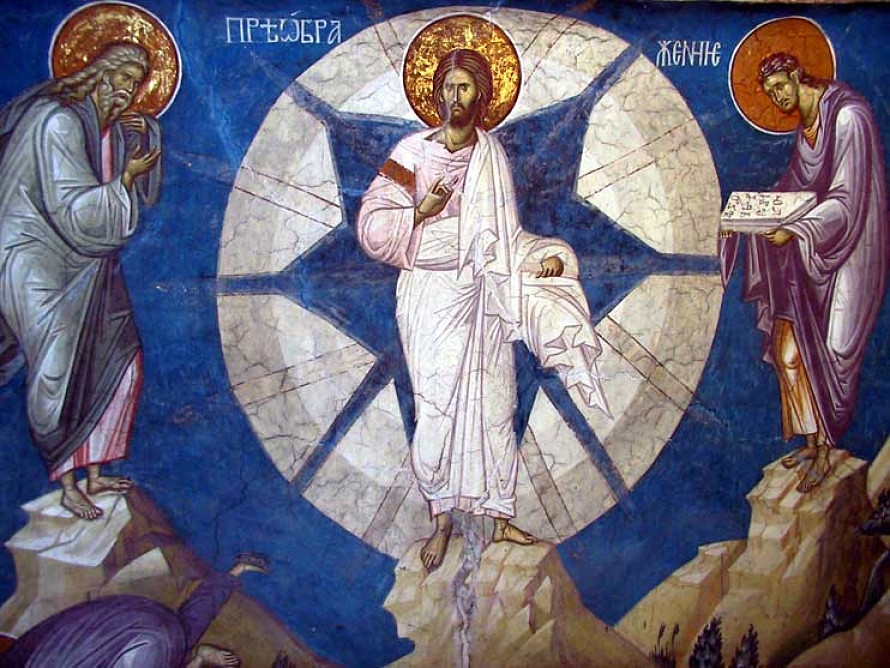
“And behold, two men talked with him, Moses and Elijah, who appeared in glory and spoke of his departure, which he was to accomplish at Jerusalem.”  St. Luke 9:30-31

Over the last few months, I’ve had several conversations with people who are staring down retirement.  Some friends are leaving their work with a deep sense of satisfaction, ready to take on some long-postponed projects.  Others are worried about how they will fill the time and are looking for a way to hang in for a few more years.  One friend was doing the most fruitful and fulfilling work of his career, but the funding ran out, and he’s facing part-time work, something quite different.  It might be marvelous, but I don’t think he’s completely sold on it yet. 

In the back of most of those conversations lay a series of questions I suspect we’ve all asked ourselves, even if retirement lies half a lifetime away: “Does my life add up? Does it have meaning, this work into which I have poured so much of my time and energy?  Do I have a legacy?”  It’s worth reminding ourselves that our privilege allows us to ask these questions of our work.  Most people in history and most people in the world today simply must toil on until their bodies give way.  But for all people, life is unpredictable, full of unexpected shifts, confusing blessings and overwhelming sorrows.  We long to understand where our lives are headed, how their true meaning will be revealed.  But so often, in the end, there is only confusion.  We see ourselves only through clouds of smoke, beset by doubt and fear. 

Thursday, August 3, 2017

Zeal and Patience, Part II


As the Episcopal and United Methodist churches consider a full-communion agreement, this article continues the story of the zealous John Wesley and  the patient Samuel Seabury, the founders of the two churches.  It outlines a missed opportunity for a united church in 1784, and what the failure then may still be able to teach us today.  The article was first published on The Living Church's Covenant blog on 12 July
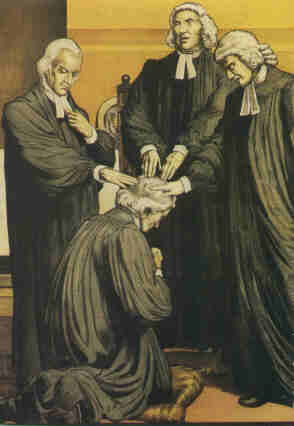
As Wesley sent off his letter, and Thomas Coke with it to come to America with the purpose of ordaining his preachers, another Anglican priest was also travelling about Britain. Samuel Seabury, bishop-elect of Connecticut, was pursuing a different potential solution to American Anglicanism’s pastoral crisis, one he believed to be essential to “follow[ing] the Scriptures and the Primitive Church.” Seabury was in search of three bishops who would consecrate him, so that episcopacy might be carried back to his native land.
Seabury’s zeal in pursuit of his cause cannot be doubted, but he was above all a patientman. For nearly a year and a half, he met with a number of English bishops to plead his case, some of them multiple times. Like Wesley, he was rather woodenly rebuffed by Robert Lowth, the Bishop of London, who could not imagine the prospect of consecrating a bishop who lacked a warrant from the Connecticut state legislature. Some of Seabury’s countrymen were using their personal contacts to work against his case, including the bishop-elect of Maryland, William Smith, who distrusted Seabury because he had been a loyalist. Deeply frustrated by delays and inconclusive answers, Seabury wrote to a fellow Connecticut clergyman, “I shall be at my wits’ end. … This is certainly the worst country in the world to do business in” (Letter to Abraham Jarvis).

Monday, July 17, 2017

Love and Reason

“And the LORD said to her, "Two nations are in your womb, and two peoples, born of you, shall be divided; the one shall be stronger than the other, the elder shall serve the younger.”
Genesis 25:23

What does she see in him?  Surely, like me, you’ve sat in the congregation at a wedding more than once, staring the couple before you.  It couldn’t be the looks or the brain power, to be sure.  Wouldn’t be the prospect for success or the pleasant disposition.  Surely, she could do better for herself. 

And yet those promises are made.  Such bold things they are to say to another person, who is surely to change, and not always for the better.  “Will you have this man, this woman?” Love which must choose, if it is to be love.  What does she see in him?  Isn’t it merely that she sees him, and that is enough. 

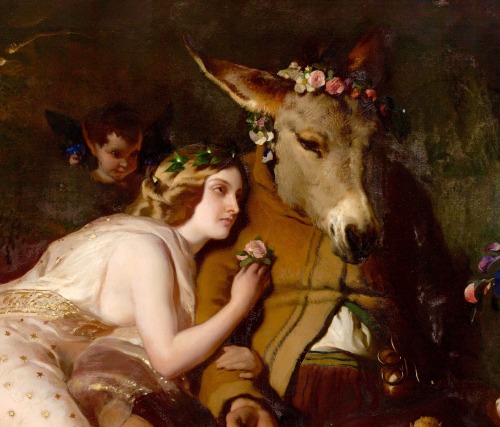
The blindness of love: it must be about the oldest of all jokes.  In A Midsummer Night’s Dream, when Titania awakens to fall in love with Bottom, recently turned into a donkey, he gets the best line: "And yet, to say the truth, reason and love keep little company together nowadays.[1]”  Pascal may have been mulling over higher things, but he was making the same general point when he wrote: “The heart has its reasons, which reason does not know.[2]”

Tuesday, July 11, 2017

Wretched man that I am

“Wretched man that I am! Who will deliver me from this body of death?  Thanks be to God through Jesus Christ our Lord!”  Romans 7:24-25

The Mrs. Piggle-Wiggle stories are favorites on our boys’ bookshelves.  They are set in a pleasant suburb in the mid-fifties, the sort of place where mothers have always just taken sugar cookies out of the oven and daddies are headed out after work to finish the new treehouse ladder.  The stories are populated with children—accomplished, good natured, obedient children—who just happen to be passing through unfortunate phases.

Take Nicholas Semicolon, subject of the story Philip read to all of us as we made our way across Maine last week.  Nicholas is ten, large and strong for his age, the apple of his mother’s eye.  But he also happens to have become a thoroughly rotten bully.  He hits girls and pulls dog’s tails, upsets baby carriages and speaks rudely to everyone he meets.  His parents have been blissfully ignorant about all of this until they receive a call from Mrs. Eager, whose son’s legs are covered in bandages after little Nicky’s latest attack.