Showing posts with label love. Show all posts

Wednesday, November 15, 2017

The faith of an alto: remembering Grandma

“Therefore are they before the throne of God, and serve him day and night within his temple.”  Revelation 7:15       

Grandma was an alto.  I learned this when I joined the choir as a ten year old, before my voice changed.  Mom placed me on the second row, between grandma and grandpap.  The joke was that this was for the sake of public order.  It took advantage of the fact that grandpap could only hear well in his right ear.  It kept me at a bit of a distance from those other tenors and basses who always had a joke to tell at the wrong moment.  But really, I think, it was so I would learn from grandma what it meant to be part of a choir.

Altos don’t get to sing the melody, like the sopranos, and they aren’t generally given dramatic leaps or catchy rhythms like basses.  They hold the middle voice and keep the beat.  Sometimes they will sing pretty much the same note for whole lines of music.  The other voices rise and fall, but altos are steadfast, anchoring the other members of the choir and drawing them together into a sound that is all the richer and more vibrant for their humble contribution. 

There isn’t any choral singing without altos—just lots of performers vying for attention, delighted in the sound of their own voices.  The blend is the truly beautiful thing about choral singing.  It relies on listening to each other, and requires that some must take the humbler place, offering their best as a form of service to the whole, giving what they have in love that does not seek for recognition or honor. 

Monday, July 17, 2017

Love and Reason

“And the LORD said to her, "Two nations are in your womb, and two peoples, born of you, shall be divided; the one shall be stronger than the other, the elder shall serve the younger.”
Genesis 25:23

What does she see in him?  Surely, like me, you’ve sat in the congregation at a wedding more than once, staring the couple before you.  It couldn’t be the looks or the brain power, to be sure.  Wouldn’t be the prospect for success or the pleasant disposition.  Surely, she could do better for herself. 

And yet those promises are made.  Such bold things they are to say to another person, who is surely to change, and not always for the better.  “Will you have this man, this woman?” Love which must choose, if it is to be love.  What does she see in him?  Isn’t it merely that she sees him, and that is enough. 

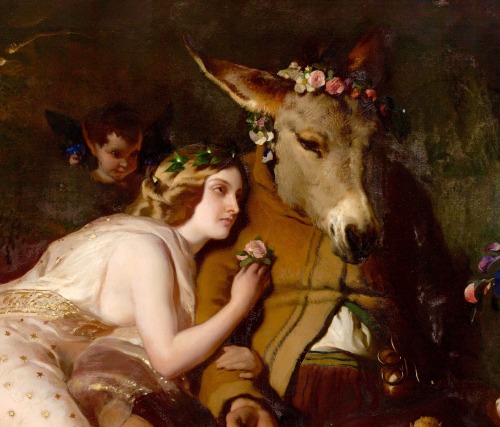
The blindness of love: it must be about the oldest of all jokes.  In A Midsummer Night’s Dream, when Titania awakens to fall in love with Bottom, recently turned into a donkey, he gets the best line: "And yet, to say the truth, reason and love keep little company together nowadays.[1]”  Pascal may have been mulling over higher things, but he was making the same general point when he wrote: “The heart has its reasons, which reason does not know.[2]”

Thursday, April 13, 2017

It Would Have Been Enough

“Having loved his own who were in the world, he loved them to the end.”  St. John 13:1

Maybe you saw the article in the Washington Post last week about matzoh man’s visit to Farragut Park[1].  Maybe, at least, you remember the unforgettable picture.  Matzoh Man is a rabbi, Shmuel Herzfeld of Synagouge Ohev Sholom in Northwest.  About this time every year he dresses in his matzoh suit and kippah, which are white with brown spots.  He revs up the matzoh mobile, a Crown Vic wrapped in a vinyl coating that makes it look like the ubiquitous Jewish cracker. 

And he drives downtown to pass out boxes of the unleavened bread, all the while wishing people a happy Passover and reminding Jews to keep the Seder at home this year.  He’s ready to give you the matzoh you need, to invite you to the community seder at his synagogue, to do everything he can to awaken the consciousness of America’s increasingly secular Jews to remember their ancient traditions and to celebrate God’s faithfulness once more this year.

The Post reporter, who was obviously having a great time with the article, asked rabbi Herzfeld why he does it.  And as I was reading, I thought to myself: “this guy is going to say he was a performance artist in his former life, or that he finished last in the rabbinical council’s fantasy football pool.”  Why else would a well-educated, successful religious leader go downtown dressed like a Saltine to shame his fellow Jews into keeping the Seder. 

Tuesday, March 21, 2017

Ponder: "the means whereby we enter into its bounty"

“Traherne’s devotion to the cross sprang from seeing it the final proof of the nature of God, a nature which had been indicated in all the Divine actions wherever we may look, in the world around us, into our own best thoughts, into the history of man’s redemption, everywhere is to be seen an ever-broadening stream of love.  The cross is both the demonstration of that love and the means whereby we enter into its bounty.  Traherne’s eyes are not fixed upon the damnation from which the passion of Christ saves mankind, but on the felicity into which it admits us.  We learn to prize our own nature by thus seeing the value that God sets upon it.  So our deepest repentance must be for having failed to love and our prayer that we may love more fully.”

C. J. Stranks, Anglican Devotion, 105-6.

Saturday, March 18, 2017

Praying the Passion with St. Bridget: Devastating and Glorious

God was in Christ, reconciling the world unto himself, not imputing their trespasses unto them; and hath committed unto us the word of reconciliation.  II Cor. 5:19

If you’ve ever read through one of the Gospels from beginning to end in a single setting, maybe what surprised you most was how long the passion story, the account of Jesus’ suffering and death is.  In what is probably the earliest Gospel, St. Mark, 45% of the text is of the last week of Jesus’ life.  Regular worshippers know to prepare themselves for Palm Sunday, because when we read the passion, it will take quite a long time.

The Gospels are unlike any other kind of literature that predates them in the way they focus in on this final (or properly almost final) part of the life of their subject.  We have some deathbed scenes for other important figures in the Bible, and the classical biographies usually include an account of the death. There is generally in ancient literature a sense that the death reveals the character, but the passions of the Gospel stories are really unprecedented.

Friday, January 20, 2017

Behold the Lamb

“The next day he saw Jesus coming toward him, and said, "Behold, the Lamb of God, who takes away the sin of the world!”  St. John 1:29

I wonder if you have chosen your seat in church for a particular reason.  A few years ago, one of my parishioners told me that she had thought a good deal about it before settling on her choice. A dear friend, a rather holy woman, had once sat week by week in the pew in front of her.  She didn’t really hear that well, so being nearer the pulpit was useful.  But really, she chose the pew because it had the best angle for viewing both her favorite stained glass window and the Altar Cross. Seeing both those things allowed her to concentrate her mind when she prayed and helped her to feel that God was near.

I could understand just what she meant, because I too had a favorite seat, the rector’s stall at Saint Paul’s Church in Sharpsburg.  Because there I had a perfect view of the Lamb.  There was a tiny window in the wall of the chancel just opposite the rector’s pew, a lamb with a halo, bearing the flag of victory.  Jesus, the Lamb of God who takes away the sin of the world.  No one could see it but me, but I saw it constantly, as I sat and listened to the readings, as I turned to the people to pronounce the Word of Absolution or to approach the pulpit to preach, as I turned to the Altar to pray.

Friday, December 30, 2016

He Speaks in a Baby's Cry

“No man hath seen God at any time; the only begotten Son, which is in the bosom of the Father, he hath declared him.”  St. John 1:18

God speaks to His people.  This is where all Biblical religion begins, with a God who knows us and who addresses us, who wishes us to know Him and the truth about Him.  He has spoken, our Epistle lesson says, “at sundry times and in divers manners.” 

All things began with His speaking, “let there be,” and it was—by the Word, Saint John assures us, “everything was made that was made.”  God speaks through the creation itself—in vistas that take our breaths away, in the ordered progression of sun and moon, in the complex laws of nature.  The heavens tell His glory, the Psalmist assures us,[1] and all things return the cry, “bless the Lord, praise Him, and magnify Him for ever.[2]”

God speaks in the conscience, our common faculty for knowing right and wrong, that “light that enlightens every man that comes into the world.”  He speaks through our deepest longings and highest aspirations, our yearning to know that which is noblest and best, and to be united with it.  He speaks in our desire to love others, in our search for deep stillness, in our persistent sense of justice. 

Monday, November 28, 2016

For Meditation: "and when my all of strength shall fail"

"What though my shrinking flesh complain
  And murmur to contend so long?
I rise superior to my pain;
  When I am weak, then I am strong;
And when my all of strength shall fail
I shall with the God-man prevail.

Yield to me now--for I am weak
 But confident in self-despair!
Speak to my heart, in blessings speak,
  Be conquered by my instant prayer;
Speak, or thou never hence shall move,
  And tell me if thy name is LOVE.

'Tis Love!  'Tis Love!  Thou diedst for me;
  I hear thy whisper in my heart,
The morning breaks, the shadows flee,
  Pure Universal Love thou art;
To me, to all, thy bowels move--
  Thy nature, and thy name, is LOVE."

Charles Wesley, "Wrestling Jacob"

Wednesday, October 12, 2016

Ponder: "in their difficulties they know the suffering Christ"

“This is why I want a Church which is poor and for the poor. They have much to teach us. Not only do they share in the sensus fidei, but in their difficulties they know the suffering Christ. We need to let ourselves be evangelized by them. The new evangelization is an invitation to acknowledge the saving power at work in their lives and to put them at the centre of the Church’s pilgrim way. We are called to find Christ in them, to lend our voice to their causes, but also to be their friends, to listen to them, to speak for them and to embrace the mysterious wisdom which God wishes to share with us through them.   Our commitment does not consist exclusively in activities or programmes of promotion and assistance; what the Holy Spirit mobilizes is not an unruly activism, but above all an attentiveness which considers the other “in a certain sense as one with ourselves”. This loving attentiveness is the beginning of a true concern for their person which inspires me effectively to seek their good. This entails appreciating the poor in their goodness, in their experience of life, in their culture, and in their ways of living the faith. True love is always contemplative, and permits us to serve the other not out of necessity or vanity, but rather because he or she is beautiful above and beyond mere appearances: “The love by which we find the other pleasing leads us to offer him something freely”.  The poor person, when loved, “is esteemed as of great value”,  and this is what makes the authentic option for the poor differ from any other ideology, from any attempt to exploit the poor for one’s own personal or political interest."
Pope Francis, Evangelii Gaudium 197-198.

Monday, October 10, 2016

Ponder: "the true way of all your loves upon earth"

“Out of the darkness of my life, so much frustrated, I put before you the one great thing to love on earth: the Blessed Sacrament. .... There you will find romance, glory, honour, fidelity, and the true way of all your loves upon earth, and more than that: Death: by the divine paradox, that which ends life, and demands the surrender of all, and yet by the taste (or foretaste) of which alone can what you seek in your earthly relationships (love, faithfulness, joy) be maintained, or take on that complexion of reality, of eternal endurance, which every man's heart desires.”


J. R. R. Tokein, “A Letter to Michael Tolkein, 6-8 March, 1941”

Ponder: "companions in shipwreck, not guiding stars"

"There is in our Western culture the romantic chivalric tradition still strong, though as a product of Christendom (yet by no means the same as Christian ethics) the times are inimical to it. It idealizes 'love' — and as far as it goes can be very good, since it takes in far more than physical pleasure, and enjoins if not purity, at least fidelity, and so self-denial, 'service', courtesy, honour, and courage. Its weakness is, of course, that it began as an artificial courtly game, a way of enjoying love for its own sake without reference to (and indeed contrary to) matrimony. Its centre was not God, but imaginary Deities, Love and the Lady. It still tends to make the Lady a kind of guiding star or divinity – of the old-fashioned 'his divinity' = the woman he loves – the object or reason of noble conduct. This is, of course, false and at best make-believe. The woman is another fallen human-being with a soul in peril. But combined and harmonized with religion (as long ago it was, producing much of that beautiful devotion to Our Lady that has been God's way of refining so much our gross manly natures and emotions, and also of warming and colouring our hard, bitter, religion) it can be very noble. Then it produces what I suppose is still felt, among those who retain even vestigiary Christianity, to be the highest ideal of love between man and woman. Yet I still think it has dangers. It is not wholly true, and it is not perfectly 'theocentric'. It takes, or at any rate has in the past taken, the young man's eye off women as they are, as companions in shipwreck not guiding stars. (One result is for observation of the actual to make the young man turn cynical.) To forget their desires, needs and temptations. It inculcates exaggerated notions of 'true love', as a fire from without, a permanent exaltation, unrelated to age, childbearing, and plain life, and unrelated to will and purpose. (One result of that is to make young folk look for a 'love' that will keep them always nice and warm in a cold world, without any effort of theirs; and the incurably romantic go on looking even in the squalor of the divorce courts)."


J. R. R. Tolkein, "A Letter to Michael Tolkein, 6-8 March, 1941"

Monday, July 11, 2016

Casuistry and Prophecy

“Which of these three, do you think, was a neighbor to the man who fell into the hands of the robbers?” He said, “The one who showed him mercy.” St. Luke 10:36-37

The book was called “The Casuist: Cases in Moral and Pastoral Theology,” and because it was published in 1906, I was able to download it onto my Kindle for free.  In the little town where I last served as rector, they gave free gym memberships to the local clergy, so I took my exercise on the elliptical machine, and for about six months, “The Casuist” kept my mind occupied as my arms and legs ran through the machine’s monotonous courses.

I don’t know if any of you read in the gym or not, but I’ve found that books with short chapters and relatively punchy content works best.  And “The Casuist” filled the bill in spades.  Over several volumes, it collected hundreds of “hard cases,” moral quandaries that had been sent to the author, a certain Stanislaus Woywod, OFM, by puzzled priests who ran across them while hearing confessions and giving spiritual advice. 

Fr. Woywod’s cases tend toward the curious and the colorful.  There’s Mary, who lays dying and would like to make her confession to the priest over the telephone because her antireligious husband forbids him from entering the house.[1]  John, who becomes engaged to a (presumably different) Mary, and then breaks it off without any good reason and marries Martha in a civil ceremony needs to sort out what he owes to his jilted.[2]   And there’s a certain Father X, who because of his scandalous conduct, has been forbidden by his bishop to enter a saloon for a full year except to administer the last rites.  If he is vacationing in another diocese, the good father wonders, does the prohibition still apply?[3]

Tuesday, April 26, 2016

The Witness of Love


“Just as I have loved you, you also should love one another. By this everyone will know that you are my disciples, if you have love for one another."  St. John 13:34-35

It is good to be back with you this morning.  As some of you will know, I have been in central Africa for the last few weeks.  I have spent a little of my time watching magnificent wild animals, and a little of it eating delicious wild animals, and a little of it explaining to bewildered Zambian taxi cab drivers how it can possibly be that Donald Trump is doing so well in the primaries.

But most of my time has been spent attending and writing stories about an important meeting of the worldwide Anglican Communion.  I was sent to Africa as a reporter for The Living Church, a magazine and website that serves the Episcopal Church, to report on the meeting of the Anglican Consultative Council that was being held in the Cathedral in Lusaka, Zambia.  If you want to read a few of my articles that summarized what was happening, you find them on The Living Church website. 

Wednesday, March 16, 2016

Ponder: alive until the end.

Creation calls for self-surrender,
Not loud noise and cheap success.
Life must be lived without false face,
Lived so that in the final count
We draw unto ourselves love from space.
So plunge yourself into obscurity
And conceal there your tracks.
But be alive, alive your full share,
Alive until the end.
Boris Pasternak

Tuesday, January 12, 2016

Ponder: "the binding is love"

"All of us here need a body that is mutually supportive, that loves one another, that stoops to lift the fallen and kneels to bind the wounds of the injured. Without each other we are deeply weakened, because we have a mission that is only sustainable when we conform to the image of Christ, which is first to love one another. The idea is often put forward that truth and unity are in conflict, or in tension. That is not true. Disunity presents to the world an untrue image of Jesus Christ. Lack of truth corrodes and destroys unity. They are bound together, but the binding is love. In a world of war, of rapid communications, of instant hearing and misunderstanding where the response is only hatred and separation, the Holy Spirit whose creative and sustaining gifting of the church is done in diversity, demands that diversity of history, culture, gift, vision be expressed in a unity of love. That is what a Spirit filled church looks like."

Archbishop Justin Welby, Archbishop's Address to the Primates' Meeting, 11 Jan. 2016.

Friday, January 8, 2016

Costly Devotion

From Covenant, 6 Jan. 2015

Then, opening their treasures, they offered him gifts, gold and frankincense and myrrh. — Matthew 2:11

A few years ago I went on retreat at a convent, and, because the guest dining room was being renovated, I was invited to take my meals with the nuns. This was a very traditional community, all black habits and plainsong. For years, the nuns had operated schools, but most of them were older now, and their main ministry was hosting people on retreat. The meals that the nuns were served were among the oddest I have ever eaten: a gathering of opposites. The main dishes were brutally simple: oatmeal, baked fish, bean soup — the food of ascetics. But at the end of the serving table was a little tray with all the recent gifts to the community: exotic jams of many colors, preserved figs, little French cheeses, even a chocolate layer cake.

It’s easy to understand how this worked: an old student would come back to visit her former teacher, and she wanted to bring a little something. But what in the world do you give a nun? Well, something to brighten the common table, a little delight you had enjoyed and wanted to share. And because these nuns were much loved, and probably also because they had a reputation for austerity, lavish, expensive foods arrived to grace every meal.

Wednesday, December 9, 2015

For Meditation: Calls on our daily sympathy and tenderness

“Nothing is more likely to engender selfish habits (which is the direct opposite and negation of charity), than independence in our worldly circumstances. Men who have no tie on them, who have no calls on their daily sympathy and tenderness, who have no one's comfort to consult, who can move about as they please, and indulge the love of variety and the restless humours which are so congenial to the minds of most men, are very unfavourably situated for obtaining that heavenly gift, which is described in our Liturgy, as being "the very bond of peace and of all virtues." On the other hand, I cannot fancy any state of life more favourable for the exercise of high Christian principle, and the matured and refined Christian spirit (that is, where the parties really seek to do their duty), than that of persons who differ in tastes and general character, being obliged by circumstances to live together, and mutually to accommodate to each other their respective wishes and pursuits.—And this is one among the many providential benefits (to those who will receive them) arising out of the Holy Estate of Matrimony; which not only calls out the tenderest and gentlest feelings of our nature, but, where persons do their duty, must be in various ways more or less a state of self-denial.”

J. H. Newman, “Love of Relations and Friends.” Parochial and Plain Sermons, II.5.

Wednesday, November 25, 2015

For Meditation: Anger born of love

“Anger does not characterize the Father in any essential way. His anger, like any human parent’s anger, is born of love. It is frustrating in the extreme to see your children hurt themselves and others. Moreover, kindly Jesus displays this anger too. ..Among other examples we might select, the most famous instance of Jesus’ anger is the overturning of the moneychangers’ tables in the Temple (Matt. 21, Mark 11, Luke 19, John 2). The moneychangers may be doing essential work, but they are sitting in the Court of the Gentiles and impeding the power of Temple worship to draw in the outsider. They are sitting in the way of God’s love. But the Father doesn’t give up his Son because he is angry with the world. Jesus doesn’t go the Cross full of rage.  God’s anger (in the Old Testament and New Testament alike) is never the byproduct of fear and loneliness. But mine usually is.”

Andrew Petiprin, “I’m Mad as Hell.”  Covenant 25 Nov. 2015

Sunday, November 22, 2015

Ponder: What will they hear?

"We cannot forget our brothers and sisters in peril.  And we cannot seal ourselves off from our mission field.  An entire generation of those fleeing genocide will be asking whether there is an alternative to the toxic religion they've seen,  Will they hear from evangelicals, "Jesus loves you," or will they hear from us, "Who then is my neighbor?"  There are massive implications to both answers.
Russell Moore, "We Need to Improve Security and Show Compassion."  The Washington Post.  21 Nov. 2015, B2

Friday, November 20, 2015

For Meditation: No such thing as love without risk

Jesus tells us to love our neighbor as ourselves. When a legal scholar asked him who counts as a “neighbor,” Jesus did not answer but instead told a story about senseless attackers, a helpless victim, callous leaders, and a good Samaritan. Then he asked, “Who was a neighbor to the man who fell into the hands of robbers?” The expert in the law replied, “The one who had mercy on him.” Jesus told him, “Go and do likewise.”
Basically, when the man asked, “Which people do I have to love?” Jesus rejected the question. It is not up to us to discern who to love. We are to love indiscriminately, not asking whether our beloved deserves our attention and assistance. We are to love universally, not allowing differences in ethnicity or religion to become barriers to compassion. We are to love dangerously, making ourselves vulnerable to betrayal, misunderstanding, and perhaps even death. Don’t forget that the Samaritan offered to pay the wounded man’s hospital bills, not knowing in advance what kind of commitment that would be. He did not interrogate the victim to make sure he was trustworthy, nor did he stop to calculate the cost of mercy. He loved, knowing full well that there is no such thing as love without risk.
Russell Johnson, from Facebook, 20 Nov. 2015