Sunday, November 19, 2017

Managing Well

“He entrusted to them his property; to one he gave five talents,  to another two, to another one, to each according to his ability. Then he went away.”  St. Matthew 25:14-15

Last weekend, I went an apple butter boil, an old family tradition, at a cousin’s farm in my hometown.  By the bubbling kettle, I struck up a conversation with another cousin, Robin.  She plays the organ at Mount Carmel Methodist Church, a mile or two up the road in Shanktown, Maryland, a place that doesn’t make it onto the road atlas.  Mount Carmel is a white clapboard chapel, built around the time of the Civil War.  My grandparents were members and four generations of Michaels sleep in its shady churchyard.  I’ve always thought of it as a timeless place.

But Robin said things have changed.  There are only twenty of them in the pews most Sundays.  There’s no choir or Vacation Bible School anymore.  My cousin Andrew’s baby girl is the only child.  Mount Carmel has never been a big church, and it has always shared a pastor with the other local Methodist churches.  But it was probably two or three times that size when I was a kid. 

Wednesday, November 15, 2017

The faith of an alto: remembering Grandma

“Therefore are they before the throne of God, and serve him day and night within his temple.”  Revelation 7:15       

Grandma was an alto.  I learned this when I joined the choir as a ten year old, before my voice changed.  Mom placed me on the second row, between grandma and grandpap.  The joke was that this was for the sake of public order.  It took advantage of the fact that grandpap could only hear well in his right ear.  It kept me at a bit of a distance from those other tenors and basses who always had a joke to tell at the wrong moment.  But really, I think, it was so I would learn from grandma what it meant to be part of a choir.

Altos don’t get to sing the melody, like the sopranos, and they aren’t generally given dramatic leaps or catchy rhythms like basses.  They hold the middle voice and keep the beat.  Sometimes they will sing pretty much the same note for whole lines of music.  The other voices rise and fall, but altos are steadfast, anchoring the other members of the choir and drawing them together into a sound that is all the richer and more vibrant for their humble contribution. 

There isn’t any choral singing without altos—just lots of performers vying for attention, delighted in the sound of their own voices.  The blend is the truly beautiful thing about choral singing.  It relies on listening to each other, and requires that some must take the humbler place, offering their best as a form of service to the whole, giving what they have in love that does not seek for recognition or honor. 

Sunday, November 5, 2017

The Youth Replies, I Can

“These are they who have come out of the great tribulation; they have washed their robes and made them white in the blood of the Lamb.”  Revelation 7:14

The tradition at my high school was that each graduation speaker had to discuss as his or her theme a famous saying of an American hero.  There was a rotating series of texts, and these were assigned by Mr. Snyder, the venerable senior class advisor, who had been at it since my mother was a student.  Even by 1996, this sort of thing was dreadfully old-fashioned, but no one really complained about it—it was just how it was at Clear Spring High School. 

I wasn’t told until two weeks before graduation which text I would have to discuss.  I wanted Daniel Webster’s words from the Dartmouth College case: “she is a small school, but there are those who love her.”  Whoever got that could write the tear-jerker.

But instead, I was assigned a bit of a poem by Ralph Waldo Emerson:
So nigh is grandeur to our dust, 
So near is God to man, 
When Duty whispers low, Thou must, 
The youth replies, I can.

Saturday, November 4, 2017

Working Through Grief: A Sermon for All Souls Day

“I look for the LORD, my soul doth wait for him, in his word is my trust.”  Ps. 130:5

My father died of a sudden heart attack when he was 54.  I was 27, working my first real job, married for a month, and completely unprepared for navigating the rest of my life without my father’s guidance and support. 

It was the most traumatic thing I’ve ever experienced.  I know that doesn’t say very much compared to what many of you have endured.  But for me, it meant deep personal sadness at the loss of a man I deeply admired and who brought so much joy into my life.  It meant concern at the even more intense grief that my mother, my grandparents and my brother were experiencing.  And the experience left me feeling adrift, more hesitant and uncertain about the future, with a kind of fear in my heart I had never really known before.

I was deeply grateful that I knew I could pray for my father, with words that the church had placed in my mouth, when it was so difficult to know just what to say to God about it all.  My father died on a Sunday afternoon, and he was buried on a Wednesday.  The next Sunday morning I went to his grave, and I took with me a little volume, The Priest’s Book of Private Devotions, marked for the page for the Vespers for the Dead. 

Wednesday, November 1, 2017

In a Season of Elegy and Hope

The Episcopal Church lost one of its great lights when Richard Wilbur died on October 14, aged 96.  Wilbur was one of the greatest American poets of the twentieth century, our nation’s second poet laureate, twice awarded with the Pulitzer Prize. At a time when his rivals often seemed to need vulgarity and extremism to attract public attention, Wilbur wrote beautiful and lyrical lines, often full of deep gratitude and profound hope. 

He was faithful member of his local Episcopal parish in the Boston suburbs, where a friend of mine was his rector for a time.  He kept a prayer book on his bedside table, and his confident faith colors the generosity and patience that mark his work.  Episcopalians may know him best for his striking Christmas hymn, A Stable Lamp is Lighted (#219).  Set to one of David Hurd’s arresting tunes, it weaves together the Nativity, the chaos and glory of Holy Week, and the hope of final restoration. 

I had another of his poems on my mind this week, In the Elegy Season, one of his first to receive wide acclaim. 

Monday, October 23, 2017

Rendering to God

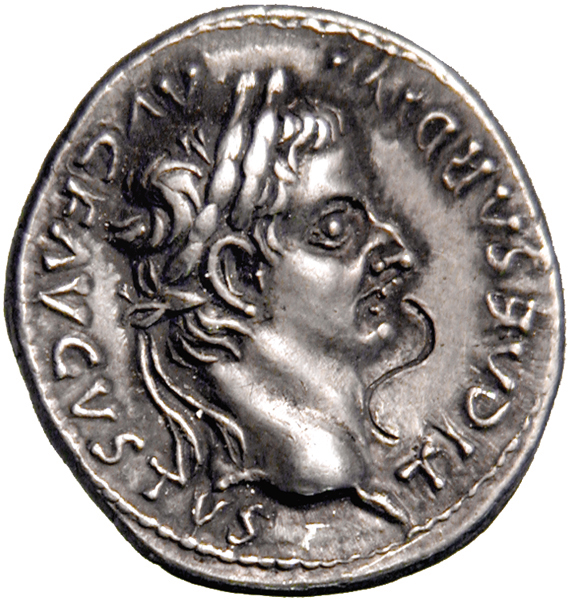
“Render therefore to Caesar the things that are Caesar’s, and to God the things that are God’s.”  St. Matthew 22:21

It was quietly noted a few weeks ago that Treasury Secretary Steve Mnuchin has declined to endorse an Obama administration plan to put Harriet Tubman on the $20 bill.  His predecessor, Jacob Lew, saw honoring the great antislavery hero as the first step in redressing a historic imbalance in the way we have honored national heroes.  The $20 bill was a convenient place to start, as Andrew Jackson has come under fire in recent years for his slaveholding and for his decision to forcibly remove Indians to the West along the infamous Trail of Tears.   

But Andrew Jackson also happens to be one of President Trump’s personal heroes.  The President honors Jackson as a brave soldier, and a symbol of democracy, the first true man of the people to be elected to our nation’s highest office.  The president laid a wreath at Jackson’s tomb as part of the 250th anniversary celebration of his birth and has hung a painting of him in the Oval Office.[1]  You can be sure that Old Hickory won’t be leaving the currency on his watch. 

The debate over the $20 bill has caused some impassioned repartee, at least among the sort of people who frequent the Facebook page of this former history major. 

Wednesday, October 18, 2017

Review: "Uncertain Times: Martin Luther's Remedies for the Soul"

From the October 20 Sounds of St. Francis

Designing an exhibition to commemorate the Reformation’s 500th anniversary is a fairly heroic task for any gallery.  Far more art was destroyed than created in the sixteenth century in those European lands that embraced the teachings of Luther, Calvin and Cranmer.  But the Walters Art Gallery has made a humble but probing attempt in its single-room exhibition, “Uncertain Times: Martin Luther’s Remedies for the Soul,” on display until October 29 at the museum in downtown Baltimore.

Fittingly, many of the most significant pieces on display are not paintings, but books.  The personal prayer book of Luther’s close associate Philip Melanchthon is there, worn from heavy use, annotated in the margins.  There’s a handsome early edition of Luther’s Tabletalk, the collection of theological rejoinders and moral advice dispensed by the aged master in his later years over the daily bread and beer, carefully recorded by his students.

Words are also the medium of a mesmerizing eighteenth century German folk art piece featured centrally in the exhibition.  The anonymous artist has scripted the many lines of Luther’s Small Catechism as a globe around the rose and cross of Luther’s coat of arms, a loyal tribute to the way in which the theologian has most often been encountered across the centuries—in this careful summary of Reformation teaching, written to be memorized by children as they prepared for their confirmations.