Showing posts with label contrition. Show all posts

Saturday, March 18, 2017

Praying the Passion with St. Bridget: A Holy Dying

Then Jesus, crying with a loud voice, said, “Father, into thy hands I commit my spirit!” And having said this he breathed his last.  St. Luke 23:46

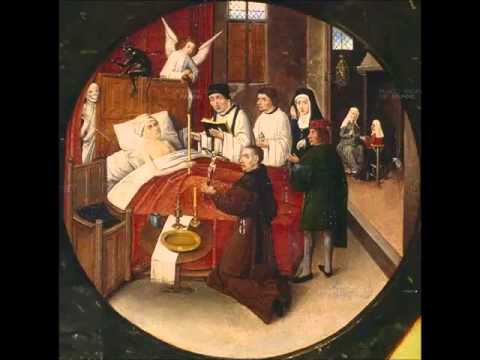
Several of the Fifteen Os also make mention of a particular aspect of discipleship that was especially important in St. Bridget’s time, ending life in faith and trust, having what Jeremy Taylor famously described as “a holy dying.”  As she meditates upon the end of Jesus’ life, St. Bridget is also inviting us, as does the final stanza of one of the Victorian passion hymns, to “Learn of Jesus Christ to die[1]

In her concern with a holy death, in part St. Bridget reflects the reality of her times.  She was surrounded by people, all of them baptized Christians, who died in unexpected ways every day.  An epidemic struck a village, an army laid siege to a town, a fire swept through a city, and thousands would die.  People lived perilous lives, and unlike the reality in the Western world today, there were very few means of effectively blunting the pain, so that most people were conscious and fully aware of death’s approach. 

Tuesday, March 8, 2016

He came to himself

“He came to himself and said… ‘I will get up and go to my father, and I will say to him, “Father, I have sinned against heaven and before you.’” St. Luke 15:17-18

At first, of course, he blamed everyone else.  We would do the same, sitting there by the pigs, our bellies gnawing with hunger.  It had been quite a ride for a while: sharp clothes, fancy meals, all the wine he could drink, fast women.  He was on top of the world, a friend on every corner.  No rules, no boundaries, no regrets.  How in the world could it all have come to pieces so quickly? 

He blamed his parents, of course.[1]  Half the inheritance--they’d promised that’s what it amounted to, but it sure didn’t seem like very much.  And what about that responsible brother of his—if he’d have come to mind the books, well it wouldn’t have all slipped away so quickly.  He blamed all those who called themselves his friends, and sponged on his good nature, all those who’d tricked him into schemes and promised to pay him back in a month’s time.  Who wouldn’t blame a thief—the dealer with the weighted dice, the pickpocket who snatched the sack from his coat, the women who left his bed before dawn.  It was the fault of tailors who made shiny clothes that wore thin too quickly, tavern men who overcharged for cheap food.  And this wretched famine—who could have seen it coming.  This master he was serving—surely he could pay more.  Surely he could find some work with more dignity.  He cursed his lot.  He cursed his enemies.  He cursed life itself, and then stared back at the pigs, and he would have climbed down into the trough beside them if he could.

He was miserable, of course.  But there’s a kind of steadfastness that can come with misery, especially when we are so certain it’s all someone else’s fault.